Let’s be honest, the volume war in the living room is a real struggle. One person needs the sound cranked up just to follow the conversation, while everyone else is reaching for earplugs. It’s a common frustration, but it’s not your fault—it’s your TV’s. Modern televisions look incredible with their razor-thin screens, but that sleek design leaves no room for quality audio components. The result is often muffled, tinny sound that makes dialogue impossible to decipher. The good news is there’s a simple fix. This guide will walk you through the world of entertainment and TV speakers, helping you find the perfect solution to bring clarity back to your favorite shows and peace back to your home.

The Struggle is Real: Tinny TV Speakers
Let’s face it, as much as we adore our sleek, modern televisions, their built-in speakers often leave a lot to be desired in the audio department. It’s like trying to appreciate a masterpiece painting through a dusty, scratched lens – you’re missing out on all the rich details and nuances that make the experience truly immersive. But why settle for mediocre sound when you can elevate your game by adding a dedicated set of speakers? These bad boys are designed to deliver room-filling, multi-dimensional audio that’ll make you feel like you’re right in the thick of the action.
Why Modern TV Speakers Fall Short
It’s not your imagination—the sound quality on most new TVs just can’t keep up with their incredible picture. The issue comes down to design. As televisions get thinner and more streamlined, there’s simply less physical space for quality built-in speakers. Manufacturers are forced to use small, weak components that often point down or away from you, which can make the audio sound muffled and distant. This is especially noticeable with dialogue, which can get lost in the mix, forcing you to constantly reach for the volume remote. It’s a common sacrifice for that sleek aesthetic and the primary reason why external audio solutions, from soundbars to full home theater systems, have become essential for a great viewing experience.
The Speaker and TV Revelation
Whether you’re a die-hard movie buff, a hardcore gamer, or just someone who appreciates crisp, powerful sound, pairing your TV with a top-notch speaker system is a game-changer. Imagine being fully enveloped in every explosion, every bone-crunching impact, and every heart-pounding musical score – that’s the kind of immersive audio experience we’re talking about here. But wait, there’s more! These nifty speaker setups aren’t just for entertainment purposes. They’re also perfect for hosting killer parties, rocking out to your favorite tunes, or even taking video calls and virtual meetings to the next level (because let’s be real, we all need a break from the office grind sometimes).
The Perks of Going Big with Sound
Now, you might be thinking, “Sure, but what’s so special about adding speakers to my TV setup?” Well, buckle up, folks, because we’re about to give you a crash course in the wonders of premium audio.
Room-Filling Immersion
One of the biggest perks of investing in a speaker system for your TV is the ability to create a truly immersive audio experience. Unlike those tinny built-in speakers, these bad boys are designed to fill your entire living space with rich, multi-dimensional sound, enveloping you in a sonic cocoon that’ll make you feel like you’re part of the action.
Tailored Sound Profiles
But it’s not just about sheer volume – many speaker systems come equipped with advanced audio technologies and customizable sound profiles, allowing you to fine-tune the audio to suit your preferences. Whether you’re a bass-head craving thunderous low-end rumbles or an audiophile seeking pristine clarity, these setups have got you covered.
Sleek, Seamless Integration
And let’s not forget about the aesthetic appeal! Many modern speaker systems boast sleek, minimalist designs that seamlessly integrate with your existing TV setup, creating a visually stunning and clutter-free living space.
How to Choose the Right TV Speaker
So, you’re ready to upgrade your TV’s sound. That’s great! But with so many options out there, picking the right speaker can feel a little overwhelming. The key is to think beyond just volume and focus on what will give you the clearest, most enjoyable listening experience for your specific space and needs. It’s not about finding the most powerful speaker, but the one that makes dialogue crisp and sound effects rich without becoming a jumbled mess. A great speaker system should make your favorite shows easier to hear, not just louder. Let’s walk through a few key things to consider to help you find the perfect match for your living room.
Match the Speaker to Your Room Size
The size of your room plays a huge role in how a speaker will sound. A massive soundbar designed for a cavernous living room will likely overpower a small den or bedroom, making the bass sound boomy and dialogue hard to distinguish. On the other hand, a compact speaker will struggle to fill a large, open-concept space, sounding thin and distant. As a general rule, choose a soundbar that complements the size of both your room and your television. A speaker that is physically too wide or too small for your TV can look out of place and might not distribute sound effectively across your viewing area.
Consider Your TV Setup and Placement
Where you place your speakers is just as important as which ones you buy. For the best results, front speakers or a soundbar should be positioned at ear level when you’re seated, pointed directly toward your main viewing spot. This ensures the sound travels straight to you, making dialogue and key audio cues much clearer. If your system includes a subwoofer for those deep bass tones, try to keep it a few inches away from any walls. Placing it directly against a wall can cause the bass to sound muffled and distorted, which can muddy the entire audio experience and make speech harder to understand.
Wall-Mounting Options
If your television is mounted on the wall, you might want to consider a soundbar that can be wall-mounted as well. This creates a clean, integrated look and ensures the sound is coming from the same direction as the picture. Most soundbars come with mounting kits or have them available as an accessory. Just be sure to check the product specifications before you buy to confirm it’s a feature that’s supported. A properly mounted speaker directs sound forward into the room, rather than having it bounce off the TV stand first, which can significantly improve clarity.
Look for Features That Clarify Sound
Modern speakers come packed with technology designed to improve your listening experience, especially when it comes to hearing conversations clearly. While features like surround sound are great for movies, the most important technologies for many of us are those that enhance dialogue. After all, what good is a thrilling action scene if you can’t understand what the characters are saying? When you’re shopping, keep an eye out for specific features that are built to make voices stand out from background noise, music, and sound effects, as this can transform your viewing experience from frustrating to enjoyable.
Voice Enhancement and Equalizer Modes
Many soundbars and speaker systems now include a “Voice Enhancement” or “Dialogue Mode.” This feature specifically identifies and amplifies the frequencies of human speech, making it easier to follow conversations without having to crank up the overall volume. Similarly, look for preset equalizer modes like “Movie,” “Music,” or “Night Mode.” Night Mode is particularly useful, as it reduces the volume of loud explosions and action sequences while keeping dialogue at a consistent, audible level so you don’t disturb others in the house. These simple settings can make a world of difference in your daily viewing.
Smart Features and Multi-Room Audio
Beyond sound quality, many speakers offer smart features that can make your life easier. Some come with built-in voice assistants like Alexa or Google Assistant, allowing you to control your TV and other smart home devices with simple voice commands. Another popular feature is multi-room audio, which lets you connect multiple speakers throughout your home over Wi-Fi. This allows you to play music in every room or move from the living room to the kitchen without missing a moment of your favorite podcast or audiobook, creating a seamless audio environment throughout your home.
Understanding Key TV Audio Terms
When you start shopping for TV speakers, you’ll quickly run into a lot of technical terms and acronyms. It can feel like learning a new language, but don’t worry—you only need to know a few key concepts to make an informed decision. Understanding how your speaker connects to your TV, what different sound formats mean, and how to interpret speaker channel numbers will give you the confidence to choose a system that’s right for you. Think of this as your cheat sheet for decoding the jargon and focusing on what really matters for great sound. Let’s break down some of the most common terms you’ll see.
Connecting Your Speaker to the TV
Getting sound from your TV to your new speaker requires a physical or wireless connection. While it might seem complicated, there are really only three main ways to do it, and most speakers offer at least two of them. The connection you choose can affect both sound quality and ease of use, so it’s helpful to know the difference. Your TV’s available ports will determine which options you can use, so it’s a good idea to take a quick look at the back of your TV before you go shopping. This simple step can save you a lot of hassle later on.
HDMI eARC
For the best possible sound quality, an HDMI eARC connection is the way to go. The “eARC” stands for Enhanced Audio Return Channel, and it allows your TV to send full-resolution, uncompressed audio signals directly to your speaker. This is the ideal connection for getting the most out of advanced sound formats like Dolby Atmos. As a bonus, it also lets you control your speaker’s volume with your regular TV remote, which helps keep your coffee table free of clutter and simplifies your daily routine. It’s the top choice for both quality and convenience.
Optical Audio
If your TV doesn’t have an HDMI eARC port, an optical audio connection is an excellent and reliable alternative. This method uses a fiber optic cable to send a high-quality digital audio signal from your TV to your speaker. While it doesn’t support the highest-end audio formats in the same way eARC does, it delivers clear, crisp sound that is a massive improvement over built-in TV speakers. It’s a simple, plug-and-play option that works with nearly all modern TVs and soundbars, making it a very common and dependable choice.
Bluetooth
For the ultimate in simplicity, a Bluetooth connection lets you connect your speaker to your TV wirelessly. This is a fantastic option if you want to avoid running cables, and the setup process is usually quick and painless. The main trade-off is that Bluetooth compresses the audio signal, so the sound quality may not be quite as rich or detailed as with a wired connection. It’s perfect for casual viewing or for setups where running a cable isn’t practical, but audiophiles might prefer the stability and fidelity of an HDMI or optical cable.
What is Dolby Atmos?
You’ll see the term Dolby Atmos mentioned on many mid- to high-end speaker systems. In simple terms, it’s a type of surround sound technology that adds a height dimension to your audio. Instead of sound just coming from in front of you and beside you, Dolby Atmos makes it feel like sound is also coming from above. This creates a truly immersive, 3D soundscape that can make you feel like you’re right in the middle of the action, with helicopters flying overhead or rain falling all around you. It’s a fantastic feature for movie lovers who want a cinema-like experience at home.
Decoding Speaker Channel Numbers (e.g., 5.1.2)
When you look at speaker specifications, you’ll often see a series of numbers separated by dots, like 2.1, 5.1, or 5.1.2. This code is a simple way to understand the speaker’s configuration. The first number tells you how many main channels, or individual speakers, it has (e.g., left, right, and center). The second number indicates whether it includes a separate subwoofer for deep bass sounds. The third number, if present, tells you how many upward-firing speakers it has for Dolby Atmos height effects. So, a 5.1.2 system has five main speakers, one subwoofer, and two height channels.
Types of TV Speaker Systems
TV speaker systems come in a few main varieties, each designed to meet different needs and preferences. The most common option is the soundbar, a simple all-in-one solution that’s perfect for most living rooms. For those who want more flexibility or a true surround sound experience, modular systems or pre-packaged home theater sets are great choices. There are even soundbars that have streaming players built right in. Knowing the basic types will help you narrow down your search and find a system that fits your home and your lifestyle without adding unnecessary complexity.
All-in-One Soundbars
An all-in-one soundbar is the simplest and most popular way to dramatically improve your TV’s audio. It’s a single, long speaker bar that sits below your TV and houses multiple speakers in one sleek package. Soundbars are designed to produce clearer, richer, and more expansive sound than your TV’s built-in speakers ever could. They are incredibly easy to set up—usually with just a single cable—and offer a fantastic balance of performance, convenience, and affordability, making them an ideal choice for almost any room and a great first step into better home audio.
Modular and Wireless Systems
If you like the idea of building your sound system over time, a modular system is a perfect fit. You can start with a core soundbar and then add other components later, such as a wireless subwoofer for more powerful bass or a pair of rear speakers for a true surround sound effect. This approach gives you the flexibility to expand your system as your budget allows and tailor it to your specific room. Because many of these components are wireless, you can create an immersive setup without having to run speaker wires all over your living room.
Pre-Packaged Home Theater Sets
For those who want a complete, immersive movie-watching experience right out of the box, a pre-packaged home theater set is the way to go. These “home-theater-in-a-box” systems typically include a soundbar, a subwoofer, and two or more satellite speakers for surround sound. Everything is designed to work together seamlessly, taking the guesswork out of matching different components. These sets are perfect for creating a cinema-like atmosphere in your living room and bringing your favorite films to life with dynamic, room-filling audio without a complicated setup process.
Integrated Streaming Soundbars
To simplify your entertainment setup even further, some companies now offer soundbars with streaming media players built right in. Devices like the Roku Streambar or the Amazon Fire TV Soundbar combine the audio-enhancing power of a soundbar with the ability to stream movies and shows from all your favorite apps. This two-in-one approach is a fantastic way to reduce clutter by eliminating the need for a separate streaming box or stick. It’s an elegant solution for anyone looking to upgrade their TV’s sound and streaming capabilities at the same time.
Finding the Perfect Fit: Top Speaker and TV Combos
Alright, now that we’ve got you all hyped up about the wonders of pairing your TV with a killer speaker system, it’s time to dive into some top picks that’ll take your home entertainment experience to new heights.
The Showstopper:
LG OLED TV + Sonos Arc Soundbar For those who demand the ultimate in audio-visual excellence, the combo of an LG OLED TV and Sonos Arc Soundbar is a true showstopper. LG’s stunning OLED display delivers jaw-dropping picture quality, while the Sonos Arc Soundbar provides room-filling, multi-dimensional audio, creating an experience that’ll leave you utterly spellbound.
The Stylish Stunner:
Samsung QLED TV + Bose Smart Soundbar 900 If you’re all about seamlessly blending style and substance, the pairing of a Samsung QLED TV and Bose Smart Soundbar 900 is sure to catch your eye (and your ears). Samsung’s sleek QLED display delivers vibrant colors and deep blacks, while the Bose Soundbar provides crisp, immersive sound with deep, resonant bass – a match made in entertainment heaven.
The Budget-Friendly Banger:
TCL 4K TV + Vizio V-Series 5.1 Home Theater Sound Bar Who says you have to break the bank for a premium audio-visual experience? The combo of a TCL 4K TV and Vizio V-Series 5.1 Home Theater Sound Bar proves that you can get outstanding picture quality and immersive surround sound without emptying your wallet. Plus, with their compact and unobtrusive designs, this setup is a perfect fit for smaller living spaces or those who prefer a more low-key entertainment system.
Best for Clear Dialogue
While a full surround sound system is fantastic for that movie theater feel, sometimes the main goal is much simpler: clearly understanding what characters are saying. If muffled dialogue and constant volume adjustments are your biggest frustrations, a dedicated personal solution might be the answer. Instead of filling the whole room with sound, devices like TV Ears deliver crisp, clear audio directly to you. This approach uses Voice Clarifying Technology® to lift dialogue out of the background noise, allowing you to catch every word without disturbing anyone else in the room. It’s a straightforward way to solve the dialogue problem without rearranging your entire living space.
Optimizing Your Setup for the Best Sound
Once you’ve chosen your speakers, the next step is making sure they perform their best. You don’t have to be an audio engineer to get great sound. Simply unboxing your new system and plugging it in is just the start; where you place your speakers and the characteristics of your room play a huge role in the final audio quality. A few thoughtful adjustments can transform good sound into an incredible listening experience. Taking a little time to fine-tune your setup will pay off every time you turn on your TV, ensuring you get the rich, clear audio you paid for.
The Importance of Speaker Placement
Where you put your speakers can make or break your sound system. For the best results, think about creating a “sweet spot” right where you usually sit. Your main front speakers should be placed at about ear level when you’re seated and angled slightly inward, pointing toward your listening position. If you have a subwoofer for those deep bass sounds, try to keep it a few inches away from the walls to prevent the sound from becoming boomy or muffled. For surround sound, the rear speakers should be positioned just behind and to the sides of your main seating area, helping to create that immersive effect.
Improve Your Room’s Acoustics
The way sound travels and bounces around your room has a major impact on what you hear. Rooms with a lot of hard surfaces—like hardwood floors, large windows, and bare walls—can create echoes that make audio sound harsh and muddled. An easy fix is to introduce soft materials to absorb some of that sound. Adding an area rug, hanging curtains, or even having plush furniture like a fabric sofa can make a significant difference. It’s also a good idea to avoid placing speakers directly in corners, as this can unnaturally amplify bass and distort the overall sound.
Use Automatic Sound Calibration Tools
Many modern sound systems come with a fantastic feature that takes the guesswork out of audio setup: automatic sound calibration. These systems often use a small microphone (sometimes built into the remote or a separate device) to listen to how test tones sound in your specific room. The system then analyzes the room’s size, shape, and furnishings to automatically adjust the speaker settings for optimal performance. This process ensures the sound is perfectly tailored to your environment, giving you a balanced and clear audio experience without needing to manually tweak complex settings. It’s a simple yet powerful tool for getting professional-quality sound at home.
The Bottom Line: Elevate Your Home Entertainment Game
At the end of the day, folks, pairing your TV with a top-notch speaker system is a game-changer for your home entertainment experience. Whether you’re a die-hard movie buff, a sports fanatic, or just someone who appreciates great sound and picture quality, this dynamic duo will take your viewing (and listening) pleasure to new heights. So, what are you waiting for? Ditch those outdated, subpar TV speakers and embrace the power of audio-visual bliss. Your ears (and your neighbors) will thank you!
Hear Every Detail with TV Ears Headphones
Discover the difference TV Ears wireless headphones and headsets can make in your TV-watching experience. Whether you’re looking for comfortable over-ear headphones or a compact, stylish headset, we have options to suit your needs. 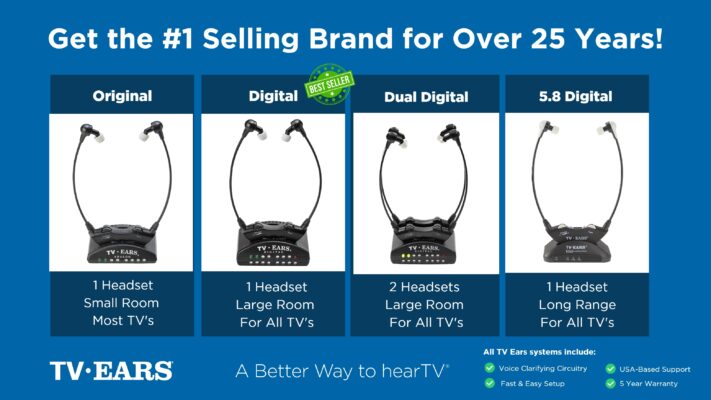 Ready to take your TV audio to the next level? Explore our Wireless Headphones and Headsets collection today! And don’t miss our custom audiologist-designed speaker system. At TV Ears, we are committed to ensuring that everyone can enjoy TV to the fullest. Our range of speakers for TV and wireless headphones and headsets are designed to cater to diverse needs and preferences, making your home entertainment experience truly exceptional. Don’t let hearing difficulties or differing audio preferences hold you back from enjoying your favorite shows and movies. Explore TV Ears’ solutions and rediscover the joy of TV-watching.
Want More Home Audio Tips?
If you’re passionate about enhancing your TV-watching experience, you won’t want to miss our other blog posts. We regularly publish articles on the latest audio technology, home entertainment tips, and more. Check out our latest blogs below:
Enhance Your TV Viewing Experience with Wireless Headphones for Watching TV
Elevate Your TV Experience with TV Ears: The Ultimate Headphones for Televisions
Enjoy Ultimate Freedom with TV Ears: Enhance Your TV with Wireless Headphones
Don’t miss out on valuable insights and tips from TV Ears experts. Investing in the right speaker for your TV can dramatically enhance your home entertainment experience. Whether you’re an audiophile or simply want to enjoy your favorite shows and movies with exceptional sound, a speaker for TV is a worthwhile addition to your setup. Explore TV Ears’ wide range of speakers, headphones and headsets today and start enjoying TV like never before.
Frequently Asked Questions
What’s the most important feature to look for if I just want to hear conversations more clearly? You’ll want to look for a speaker or soundbar that has a “Voice Enhancement” or “Dialogue Mode.” This isn’t just about making everything louder; it’s a smart feature that specifically identifies the frequencies of human speech and brings them forward. This makes conversations stand out from background music and sound effects, so you can follow along without constantly adjusting the volume.
Do I need a big, complicated system to fix my TV’s sound? Not at all. While multi-speaker home theater systems are great for a cinema experience, you can get a massive improvement with a simple, all-in-one soundbar. They are designed to be plug-and-play and offer a much richer, clearer sound than your TV’s built-in speakers. For an even more direct solution focused purely on dialogue clarity, a personal listening device can deliver crisp audio right to you without changing the room’s sound for everyone else.
My TV is a few years old. Can I still connect a modern soundbar to it? Yes, you almost certainly can. While newer TVs use an HDMI eARC connection for the highest quality sound, most soundbars also come with an optical audio port. This is a very common connection that has been standard on TVs for years and still provides excellent, high-quality digital sound. Just take a quick look at the back of your TV to see which ports you have available before you buy.
Will a soundbar make the loud commercials and action scenes even louder? This is a common concern, but many modern soundbars have a solution. Look for a feature called “Night Mode” or “Volume Leveling.” This setting automatically balances the audio by reducing the intensity of sudden loud noises, like explosions or commercials, while keeping dialogue at a consistent and understandable level. It’s perfect for watching TV late at night without disturbing others in the house.
If I get a soundbar for the room, can I still use a personal listening device like TV Ears? Absolutely, and this is often a perfect setup for many households. A soundbar can improve the general audio quality for everyone watching, while a personal device like TV Ears connects directly to the TV to provide an independent audio stream. This allows one person to have their own volume and tone control for maximum clarity, ensuring they never miss a word, while others can enjoy the soundbar at a comfortable level.
Key Takeaways
- Your TV is the Problem, Not Your Hearing: Modern, slim TVs have weak, poorly placed speakers that muddle sound. An external speaker system is the simplest solution for bringing back crisp, clear audio, especially for dialogue.
- Prioritize Features that Clarify Dialogue: Instead of just looking for the loudest option, seek out speakers with specific settings like “Voice Enhancement” or “Dialogue Mode.” These features are designed to lift conversations above background noise, solving the core issue of muffled speech.
- Fine-Tune Your Setup for the Best Sound: Where you place your speakers matters just as much as which ones you buy. Position your soundbar at ear level, keep subwoofers away from walls, and use soft furnishings like rugs to reduce echo for a dramatically better listening experience.