There’s a big difference between making the TV louder and making it clearer. When you have trouble hearing dialogue, your first instinct is to reach for the volume-up button. But this often just amplifies the background music and sound effects, making the speech even harder to distinguish. The real solution isn’t about more volume; it’s about better sound. This guide explains how to achieve true vocal clarity. We will explore why turning it up fails and introduce you to tv listening devices that are specifically engineered to separate voices from background noise, delivering crisp, clear sound right to your ears.
Hear Every Word: A Guide to TV Listening Devices
For millions of Americans, enjoying a favorite TV show or movie can be a frustrating experience due to hearing challenges. Muffled dialogue, missed punchlines, and the constant need to crank up the volume (much to the dismay of family members!) are common struggles. But the good news is, there are fantastic and fun TV listening devices for the hearing impaired designed to bring back the joy of television.
You’re not alone in this experience. Over 48 million Americans experience some degree of hearing loss, and finding the right solutions can make all the difference in enjoying daily life, including TV watching.
Why Traditional TV Listening Can Be a Challenge
Standard TV speakers often blend dialogue with background music and sound effects, making it hard to distinguish speech, especially for those with hearing loss. Even traditional headphones might not offer the specific amplification and clarity needed for voices.
Introducing TV Ears: Your Solution for Crystal-Clear TV Audio
TV Ears specializes in creating innovative TV listening devices specifically designed to address these challenges. Our systems are built around a core principle: making every word crystal clear, without compromising comfort or convenience.
What Makes TV Ears “Fun” and Effective?
- Voice Clarifying Circuitry™: This is our patented technology that sets TV Ears apart. It actively separates dialogue from background noise, amplifies the voices, and sends them directly to your ears.This means you hear the actors’ words with unparalleled clarity, even at a comfortable volume level for others in the room.
- Wireless Freedom: Our headsets offer complete wireless freedom, allowing you to move around your home without being tethered to the TV. Whether you’re in the kitchen, on the patio, or simply lounging on the couch, you stay connected to the clear audio.
- Independent Volume Control: With TV Ears, you can set your own personal volume level without affecting the TV’s main speakers. This is perfect for couples or families with different hearing needs, allowing everyone to enjoy TV together in harmony.
- Comfortable Design: TV Ears headsets are lightweight and ergonomically designed for extended wear. They sit comfortably over your ears, ensuring you can enjoy long viewing sessions without discomfort.
- Easy Setup: Our systems are designed for simple plug-and-play setup, so you can start enjoying enhanced TV audio almost immediately.
Beyond Headphones: Wireless TV Speakers for the Hearing Impaired
For those who prefer not to wear headphones, TV Ears also offers wireless speakers for TV designed for the hearing impaired. These portable speakers bring the sound closer to you, enhancing dialogue and allowing for independent volume control, all without needing to wear a device on your head.
Rediscover the Joy of TV-Watching
Don’t let hearing difficulties hold you back from enjoying your favorite shows and movies. TV Ears provides effective and user-friendly TV listening devices for the hearing impaired that truly transform your entertainment experience.
Explore our range of wireless headphones and speakers today and hear every word clearly, comfortably, and conveniently.
Why Is Hearing the TV So Difficult?
If you find yourself constantly asking, “What did they say?” while watching TV, you’re not imagining things. It’s a common frustration, and it often has more to do with technology and biology than you might think. Modern televisions and the natural process of aging can create a perfect storm that makes dialogue hard to follow. Understanding the root causes is the first step toward finding a real solution that brings clarity back to your favorite shows and movies, making television enjoyable for everyone in the room again.
The Problem with Modern TV Speakers
As televisions have become thinner and more streamlined, the built-in speakers have shrunk right along with them. These tiny speakers are tasked with producing a huge range of sounds, from deep, rumbling explosions to quiet, whispered conversations. To do this, they often compress the audio, blending everything together. This means crucial dialogue gets mixed in with loud background music and sound effects, making it difficult to distinguish the words. It’s not just you; the hardware itself is making it harder to hear speech clearly, especially for anyone with even mild hearing loss.
How Age-Related Hearing Loss Affects TV Watching
A common part of aging is a type of hearing loss called presbycusis, which typically affects our ability to hear higher-frequency sounds. These high-pitched sounds are essential for understanding the consonants in speech, like ‘s’, ‘f’, and ‘t’, which give words their definition. When you can’t hear these sounds clearly, speech can sound muffled and indistinct. Simply turning up the volume on the TV doesn’t fix this. It makes everything louder—including the background noises that were already drowning out the dialogue—but it doesn’t restore the specific frequencies you’re missing, which is why the words remain unclear.
The Impact of Listening Fatigue
Constantly straining to understand what’s being said on TV is mentally exhausting. This effort is known as listening fatigue, and it can turn what should be a relaxing activity into a stressful one. When you spend an entire movie trying to piece together conversations, you might end up with a headache or feeling drained and irritable. This also creates a difficult social situation. The volume that might be necessary for you to barely understand the dialogue is often painfully loud for your spouse, family, or friends, leading to the all-too-common “volume wars” in the living room.
Before You Buy: Simple TV Audio Adjustments
Before you invest in a new device, there are a few simple adjustments you can make to your existing television that might make a significant difference. These settings are built right into most modern TVs and are completely free to try. Taking a few minutes to explore your TV’s audio menu could provide a surprising improvement in sound clarity. It’s a great starting point and can help you better understand your specific listening needs before deciding on a dedicated solution.
Adjusting Your TV’s Sound Settings
Grab your TV remote and look for a button labeled “Menu” or “Settings.” From there, find the “Audio” or “Sound” options. Many TVs have preset sound modes designed for different types of content. Look for a mode called “Clear Voice,” “Speech,” “Dialogue,” or “News.” These settings are specifically designed to emphasize the frequencies of human speech and reduce competing background noise. You can also try manually adjusting the equalizer settings. Try turning down the “bass,” which controls low-frequency sounds like explosions, and turning up the “treble,” which controls the higher frequencies that make speech crisp and clear.
Using Closed Captioning (CC)
One of the most effective tools for catching missed dialogue is already available on your television. Closed captioning (CC) displays the dialogue and other relevant audio as text on the screen. It’s an excellent way to fill in the blanks when you miss a word or an entire sentence. Turning on captions is usually straightforward—many remotes have a dedicated “CC” or “Subtitle” button. If not, you can typically find the option in your TV’s main settings menu. Using captions ensures you never miss a critical plot point or a witty punchline again, allowing you to fully follow the story.
Which TV Listening Device Is Right for You?
Discover the difference TV Ears wireless headphones and headsets can make a differnce when you choose TV listening devices for the hearing impaired. Whether you’re looking for comfortable over-ear headphones or a compact, stylish headset, we have options to suit your needs. 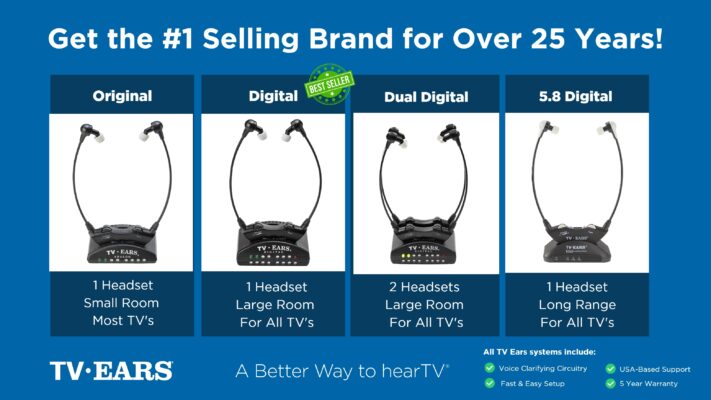 Ready to take your TV audio to the next level? Explore our Wireless Headphones and Headsets collection today! And don’t miss our custom audiologist-designed speaker system. At TV Ears, we are committed to ensuring that everyone can enjoy TV to the fullest. Our range of speakers for TV and wireless headphones and headsets are designed to cater to diverse needs and preferences, making your home entertainment experience truly exceptional. Don’t let hearing difficulties or differing audio preferences hold you back from enjoying your favorite shows and movies. Explore TV Ears’ solutions and rediscover the joy of TV-watching.
How TV Listening Systems Work
If you find it difficult to hear the television, you’re not alone, and there are specific tools designed to help. These are often called Assistive Listening Devices, or ALDs. The main goal of any TV listening system is to take the sound from your television and deliver it more clearly and directly to your ears. Instead of just making everything louder, these systems isolate the audio, especially dialogue, so you can understand every word without cranking up the volume for the entire room. As the experts at Healthy Hearing explain, “Special devices called Assistive Listening Devices (ALDs) can help you hear the TV better. These include special headphones, ways to send sound directly to your hearing aids, and closed captions.” This direct-to-you audio is the key to a better, more peaceful viewing experience.
Types of Listening Systems
When you start looking for a TV listening device, you’ll find a few different types, each working in a slightly different way. The most common options include wireless headphones made specifically for TV, streamers that connect directly to hearing aids, and hearing loop systems. Understanding the basics of each one will help you figure out which approach is the best fit for your home, your hearing needs, and your personal preferences. Let’s look at how each of these systems delivers clearer sound.
Wireless TV Headphones
Wireless TV headphones are one of the most popular and straightforward solutions. These systems typically include a transmitter base that you plug directly into your television’s audio output. This base then sends the TV’s sound wirelessly to a dedicated headset. This setup allows you to control your own volume independently, so you can have the sound as loud as you need it without disturbing anyone else in the room. Products like TV Ears are designed with this technology, often adding features like Voice Clarifying Circuitry™ to make dialogue even easier to understand.
TV Streamers for Hearing Aids
If you already wear hearing aids, a TV streamer might be the perfect accessory. These small devices also plug into your TV, but instead of sending the sound to a headset, they transmit it directly to your hearing aids. This turns your hearing aids into a personal, high-fidelity sound system. According to Hearing Aid Accessory, “These products send clear, high-quality sound directly to your hearing aids.” This is an excellent option for getting the clearest possible sound, as it’s tailored to your specific hearing prescription.
Hearing Loop Systems
Hearing loop systems, also known as induction loops, offer another way to get TV sound directly to your hearing aids. This system involves a thin wire that is placed around the perimeter of your room, creating a magnetic field. If your hearing aids have a feature called a telecoil (or T-coil), they can pick up this signal and stream the TV audio directly. This technology creates a seamless listening experience within the “looped” area, making it a great, albeit more involved, solution for dedicated TV rooms.
Key Features to Consider
As you compare different TV listening systems, a few key features can make a big difference in your day-to-day experience. Beyond just clear sound, you’ll want to think about how the device fits into your home and your lifestyle. Considering factors like the size of your room and whether multiple people will be watching at once will ensure you choose a system that solves your hearing challenges without creating new inconveniences.
Room Size and Coverage
The wireless range of a device is an important factor, especially in larger homes. You’ll want a system with a strong signal that allows you to move around without losing sound. Think about whether you want to be able to walk to the kitchen for a snack and still hear the show. A reliable connection means you won’t have to deal with static or dropouts. This freedom also helps you “avoid straining to hear, which can make you tired,” a common issue when the audio isn’t clear and consistent.
Support for Multiple Users
One of the biggest benefits of a personal TV listening device is ending the “volume war” in the living room. Look for a system that allows you to listen at your preferred volume while the TV’s main speakers work independently for others. With a system like TV Ears, “you can set your own personal volume level without affecting the TV’s main speakers.” This feature is essential for households where people have different hearing needs, allowing everyone to watch together comfortably.
The Role of Hearing Aids and Professional Advice
While TV listening devices are fantastic tools, they are one part of a larger picture of hearing health. For many people, these systems work in tandem with hearing aids to provide the best possible experience. If you’re just starting to notice hearing difficulties, it’s also a good idea to get some professional guidance. An expert can help you understand the root of the issue and recommend the most effective solutions, whether that’s a hearing aid, a TV listener, or a combination of both. This comprehensive approach ensures you’re not just treating a symptom but addressing your overall hearing wellness, leading to a better quality of life both in front of the TV and away from it.
Connecting Hearing Aids Directly to Your TV
Many of today’s hearing aids come equipped with advanced technology that allows them to connect to other devices. As Healthy Hearing notes, “Many modern hearing aids can connect wirelessly to your TV using technologies like Bluetooth or FM systems.” This can be done through a TV streamer, as mentioned earlier, or sometimes through a direct pairing with a smart TV. This is a great feature to ask your audiologist about, as it can turn your hearing aids into personalized TV speakers. If your hearing aids don’t have this capability, a dedicated listening device like TV Ears is an excellent alternative.
Why You Should See a Hearing Professional
If you consistently have trouble understanding what’s being said on television, it could be a sign of underlying hearing loss. Getting a professional evaluation is the best first step. As the experts at Hearing Doctors advise, “If you have trouble understanding speech on TV or in movies and don’t wear hearing aids, it’s a good idea to get a hearing test from a hearing doctor.” A professional can identify your specific type of hearing loss and help you find the right tools to manage it effectively, ensuring you can enjoy TV and conversations with clarity.
What to Expect: Cost and Considerations
Once you’ve decided to invest in a TV listening device, the next logical question is about cost. The price of these systems can vary quite a bit depending on the type of technology and the features included. It’s helpful to have a general idea of the price range so you can find a quality solution that fits your budget. Thankfully, these devices are typically much more affordable than a new set of hearing aids, making them an accessible starting point for improving your TV experience. Understanding the potential investment helps you make an informed choice without any surprises, ensuring you find a product that offers real value for your money.
General Cost of TV Listening Devices
The market for TV listening devices offers options at several price points. You can find basic solutions for under a hundred dollars, while more advanced systems with premium features will cost more. According to Hearing Aid Accessory, which tracks these products, “Most TV streamers are in the $200-$330 range,” with the overall category of devices costing anywhere from around $20 for a simple cable to over $400 for a full set. This range allows you to choose a device based on both your needs and your budget, ensuring there’s a solution available for almost everyone.
Stay Tuned for More TV Ears Insights
If you’re passionate about enhancing your TV-watching experience, you won’t want to miss our other blog posts. We regularly publish articles on the latest audio technology, home entertainment tips, and more. Check out our latest blogs below:
The Wireless Wonders: Unleash the Magic of Wireless Headphones!
The Wireless Headphones for TV Experience: Elevate Your Entertainment!
Hear Every Word Clearly: Exploring Fun TV Listening Devices for Hearing Impaired
Don’t miss out on valuable insights and tips from TV Ears experts. Investing in the right speaker for your TV can dramatically enhance your home entertainment experience. Whether you’re an audiophile or simply want to enjoy your favorite shows and movies with exceptional sound, a speaker for TV is a worthwhile addition to your setup. Explore TV Ears’ wide range of speakers, headphones and headsets today and start enjoying TV like never before. TV listening devices for the hearing impaired
Frequently Asked Questions
Can other people in the room still listen to the TV at their own volume? Yes, absolutely. That’s one of the main reasons these devices are so helpful. A TV listening system works independently from your television’s speakers. This means you can have the dialogue delivered clearly to your headset at your ideal volume, while your family and friends can set the TV’s main volume to a level that’s comfortable for them. It’s a simple way to end the conflict over the remote control.
How are these different from standard wireless headphones I’d use for music? While they are both wireless headsets, TV listening devices are engineered for a very specific purpose: making speech clear. Unlike typical music headphones that aim to reproduce a broad range of sounds, these systems use special technology, like our Voice Clarifying Circuitry™, to separate dialogue from distracting background noise and music. The result is that voices sound crisp and distinct, not just louder.
Do I need to have hearing aids to use a TV listening device? Not at all. These devices are designed to help anyone who struggles to hear the television clearly, whether you use hearing aids or not. They are a standalone solution that provides clear audio directly to you. If you do wear hearing aids, some models can work in conjunction with them, and there are also specific “streamer” devices that can send TV sound directly into your hearing aids.
Is the setup process complicated? Most TV listening systems are designed to be very user-friendly. The process usually involves plugging a small transmitter base into your TV’s audio-out port and a power source. Once the base is connected, it wirelessly sends the sound to your headset. It’s typically a straightforward, plug-and-play process that doesn’t require any technical expertise to get started.
What if I don’t like wearing a headset for long periods? That’s a common concern, and there are other options available. If you prefer not to wear anything on your head, you can look into wireless TV speakers. These are small, portable speakers that you place near your chair. They connect to the TV just like a headset system but broadcast the clarified sound in the space around you, bringing it closer and making it easier to hear without a headset.
Key Takeaways
- Seek clarity, not just volume: Turning up the TV often makes background noise louder, not dialogue clearer. The real solution is technology that separates speech from other sounds, so you can hear every word distinctly.
- Explore your TV’s free audio settings first: Before buying new hardware, check your TV’s menu for a “Clear Voice” or “Dialogue” mode. Activating this or turning on closed captions can make an immediate difference.
- A personal listening system ends the volume war: Devices like wireless TV headphones give you independent volume control, allowing you to get the clear sound you need without making the TV too loud for family and friends.