As a writer, I research many topics, but when I first saw the search phrase “how to make yourself go deaf,” it gave me pause. It’s a search that speaks to a level of pain that’s hard to comprehend. It is not a request for information; it feels like a cry for help. That’s why this article exists. It’s not a set of instructions for causing harm. Instead, it’s a resource filled with understanding and support for anyone feeling this overwhelmed. We’ll talk about why someone might feel this way, the very real dangers of attempting it, and—most importantly—the safe, healthy alternatives that can bring you peace.
Understanding the Impulse to Become Deaf
While most people fear losing their hearing, a small number of individuals experience a desire to become deaf. This impulse can be confusing and isolating, but it often stems from deep-seated psychological reasons. It’s not about a simple preference for quiet; it’s frequently a response to overwhelming sensory experiences or a search for identity and belonging. Understanding these underlying motivations is the first step toward finding healthy, safe solutions. Instead of seeking a permanent and irreversible change, it’s possible to address the root causes and find peace in a world of sound. Exploring these feelings with a professional can uncover the real issue, whether it’s a medical condition that makes sound painful or a psychological need for escape.
The goal is to manage your environment and well-being without resorting to self-harm. There are many ways to control your auditory world and connect with communities that offer a sense of belonging, all while preserving your health and safety. It’s a complex issue that deserves a compassionate and informed approach. Let’s look at some of the reasons behind this desire, the serious risks involved in any attempt to intentionally damage your hearing, and the healthy alternatives that can provide the peace you’re looking for. Seeking help is a sign of strength, and there are resources available to guide you toward a safer and more comfortable future.
Psychological Reasons for Wanting Deafness
Hyperacusis and Misophonia
For some, the world is simply too loud. Conditions like hyperacusis, an extreme sensitivity to everyday sounds, and misophonia, a strong hatred of specific sounds like chewing or breathing, can make daily life feel like a constant assault. A medical case study described a patient whose intense desire for deafness was a way to escape the distress caused by these conditions. When sound causes physical pain or emotional rage, the idea of complete silence can seem like a welcome relief. It’s not about wanting to lose a sense, but about wanting to end the suffering that sound brings.
A Desire to Escape or Belong
Sometimes, the wish to be deaf is less about sound and more about finding a safe space. This desire can be linked to underlying issues like anxiety, stress, or even past trauma, where the world feels overwhelming and silence represents peace. For others, it’s about identity. They may feel a strong connection to Deaf culture and believe that becoming deaf is the only way to truly belong to that community. This feeling can be related to body integrity identity disorder (BIID), a condition where there’s a conflict between a person’s physical body and their internal sense of self.
The Dangers of Intentionally Causing Deafness
Irreversible Physical Harm
It’s critical to understand that any action taken to intentionally cause deafness will result in permanent, irreversible damage. The inner ear contains delicate structures, including tiny hair cells that translate sound vibrations into electrical signals for the brain. Once these cells are damaged or destroyed, they do not grow back. Unlike a cut that heals or a bone that mends, hearing loss is forever. This means any relief you might feel would be overshadowed by a lifetime of consequences, many of which you may not have anticipated.
The Risk of Serious Infection
Attempting to induce deafness through physical means is incredibly dangerous. Inserting objects into the ear canal can easily puncture the eardrum, damage the small bones of the middle ear, and introduce bacteria that can cause severe infections. These infections can spread to other parts of the head, leading to serious medical complications that go far beyond hearing loss. The ear is a delicate and complex organ, and any attempt to tamper with it can lead to chronic pain, balance issues, and other lifelong health problems.
How Hearing Damage Occurs
Hearing damage isn’t always the result of a single, dramatic event. More often, it’s a gradual process that happens over time, sometimes without you even noticing until it’s too late. Understanding the common causes of hearing loss can help you protect yourself and recognize the risks in your daily environment. From the music you listen to on your headphones to the noise levels at your job, many factors can contribute to the health of your ears. Some causes are sudden and unavoidable, like a head injury, while others are the cumulative effect of years of exposure. The most common type of hearing loss is sensorineural, which involves damage to the inner ear or the auditory nerve. This is the kind of damage that is typically permanent.
It can be caused by aging, genetics, or exposure to loud noise. Knowing how this damage occurs is the first step in prevention. Whether it’s turning down the volume, wearing protective gear, or being aware of medications that can harm your hearing, you have the power to make choices that preserve this vital sense for years to come. Recognizing the signs early, like having trouble hearing high-pitched sounds or needing the TV volume louder than others, is key to taking action before the damage becomes more severe. Protecting your hearing is an investment in your long-term quality of life, allowing you to stay connected to the people and activities you love.
Specific Causes of Hearing Loss
Chronic Noise-Induced Hearing Loss (NIHL)
Noise-induced hearing loss (NIHL) is damage caused by exposure to loud sounds over a long period. Think of factory workers, musicians, or even someone who consistently listens to music at high volumes through earbuds. This prolonged exposure slowly wears down the tiny hair cells in the inner ear. The damage is gradual, and you might not notice it at first. Often, the first sign is difficulty hearing high-pitched sounds or understanding conversations in noisy places. Unfortunately, by the time you notice it, the damage is already done.
Acoustic Trauma from Sudden, Loud Events
Unlike chronic NIHL, acoustic trauma is hearing loss that happens instantly after exposure to a single, extremely loud sound. A gunshot, an explosion, or a firecracker going off close to your ear can cause immediate and permanent damage. This sudden blast of sound is so powerful that it can destroy the delicate structures of the inner ear in a fraction of a second. This type of hearing loss is often accompanied by tinnitus (ringing in the ears) and can be profoundly disorienting and distressing.
Other Causes: Head Injuries, Illnesses, and Medications
Noise isn’t the only culprit when it comes to hearing loss. A serious head injury can damage the parts of your brain that process sound or harm the structures of the ear itself. Certain illnesses, like meningitis or measles, can also lead to hearing loss. Additionally, be mindful of medications. Some powerful drugs, including certain antibiotics and chemotherapy treatments, are “ototoxic,” meaning they can be poisonous to your ears and cause permanent damage to your hearing.
Key Facts About Sound and Safety
Understanding Decibels (dB)
Sound is measured in units called decibels (dB). A quiet whisper is around 30 dB, a normal conversation is about 60 dB, and a motorcycle engine is around 95 dB. Any sound over 85 dB can cause permanent hearing loss, and the risk increases with the volume and duration of exposure. Your inner ear’s cochlea has thousands of tiny hair cells that are essential for hearing. Loud noises can damage or destroy these hairs, and because they don’t grow back, the resulting hearing loss is permanent.
Safe Noise Exposure Guidelines
A good rule of thumb is to avoid or limit your exposure to sounds above 85 dB. For context, that’s about the noise level of heavy city traffic. You should never be exposed to sounds louder than 120 dB, even for a short time, as this can cause immediate pain and serious damage. If you have to shout to be heard by someone standing a few feet away, the noise level is likely high enough to cause harm. Using hearing protection like earplugs or earmuffs in loud environments is a simple and effective way to keep your ears safe.
The Broader Health Consequences of Damaged Hearing
Hearing loss is about more than just turning up the volume on the TV. It can have a ripple effect across your entire life, impacting your mental health, physical safety, and social connections. When you struggle to hear, communication becomes exhausting. You might start to withdraw from conversations and social gatherings, leading to feelings of isolation and loneliness. This social withdrawal can be a gateway to more serious mental health challenges, making it crucial to address hearing issues as soon as they arise. The constant effort to hear can also lead to mental fatigue, making it harder to concentrate and stay engaged in daily activities.
Furthermore, the physical consequences can be just as serious. Your ears play a key role in your sense of balance, and damage to the inner ear can increase your risk of falls, which is a major concern, especially for older adults. Conditions like tinnitus can also develop, creating a constant noise in your head that can be incredibly disruptive. Understanding these broader consequences highlights why protecting your hearing—and seeking help when you need it—is a vital part of your overall health and well-being. It’s about maintaining your independence, your relationships, and your enjoyment of life.
Tinnitus: A Constant Ringing in the Ears
One of the most common and frustrating consequences of hearing damage is tinnitus. It’s often described as a persistent ringing in the ears, but it can also sound like buzzing, hissing, or clicking. For some, it’s a minor annoyance; for others, it’s a debilitating condition that disrupts sleep, concentration, and peace of mind. Tinnitus is a sign that something is wrong within your auditory system, and while it’s often associated with hearing loss, it can also be a symptom of other health issues.
Balance Problems and Vertigo
Your inner ear is home to the vestibular system, which is your body’s internal gyroscope. It’s responsible for maintaining your sense of balance. When the delicate structures of the inner ear are damaged, it can throw this system off-kilter, leading to dizziness, vertigo (the sensation that the room is spinning), and an increased risk of falling. These balance issues can severely impact your mobility and confidence, making everyday activities feel hazardous.
The Connection to Anxiety and Depression
The link between hearing loss and mental health is well-established. The strain of trying to hear, the frustration of miscommunication, and the social isolation that often follows can contribute to significant psychological distress. People with hearing loss have a higher risk of developing anxiety and depression. If someone is already struggling with their mental health, the added burden of hearing loss can worsen their condition, making it even more important to seek comprehensive support.
Hearing Loss by the Numbers
If you’re experiencing hearing loss, you are far from alone. It’s one of the most common health conditions people face, affecting individuals of all ages. Noise-induced hearing loss, in particular, is a widespread public health issue that often goes unrecognized until significant damage has occurred. The statistics paint a clear picture of just how prevalent this condition is, underscoring the importance of awareness and proactive hearing protection for everyone, not just those in traditionally “loud” professions or environments. Seeing the numbers can help put the problem into perspective and motivate you to take your hearing health seriously.
It’s not just an “old person’s problem”—millions of young and middle-aged adults are living with hearing damage from preventable causes. These figures from the Cleveland Clinic highlight the scale of the issue and serve as a powerful reminder that hearing health is something we should all take seriously, starting from a young age. By understanding the scope of the problem, we can better advocate for ourselves and our loved ones, encouraging regular hearing checks and safe listening habits to preserve this precious sense for a lifetime.
Statistics Among American Adults
Hearing loss is incredibly common among adults in the United States. According to recent data, about 26 million American adults between the ages of 20 and 69 have hearing loss that was likely caused by exposure to loud noise. This shows that a significant portion of the working-age population is already dealing with the consequences of noise damage, which can impact their careers, relationships, and overall quality of life. It’s a silent epidemic that affects millions in their prime.
Hearing Damage in Children and Teens
Perhaps even more concerning is the prevalence of hearing damage in younger generations. An estimated 5.2 million children and teenagers between the ages of 6 and 19 already have some degree of noise-induced hearing loss. This is largely due to the widespread use of personal listening devices with earbuds, which deliver sound directly into the ear canal. This early damage sets the stage for more severe hearing problems later in life, making education about safe listening habits more important than ever.
Finding Support and Healthy Alternatives
If you are struggling with sound sensitivity or a desire for deafness, please know that there are safe and healthy ways to find relief and support. The first and most important step is to talk to a professional. A doctor or mental health expert can help you understand the root of your feelings and guide you toward solutions that protect your well-being. Instead of taking a drastic and irreversible step, you can learn strategies to manage your auditory environment and address the underlying issues that are causing you distress. There is a path forward that doesn’t involve self-harm, and it starts with reaching out for help.
From medical treatments and therapeutic support to practical tools and community engagement, you have options. The goal is to empower you with the resources you need to feel in control of your life and your sensory experiences. Whether you need help managing a medical condition, processing trauma, or finding a community where you feel you belong, support is available. You don’t have to go through this alone, and taking the step to seek help is a powerful move toward a better, more comfortable life where you are in control.
The Importance of a Medical Diagnosis
What to Expect from an Audiologist
If you’re concerned about your hearing or experiencing sound sensitivity, an audiologist is the right professional to see. They are experts in hearing and balance disorders. During a visit, they will conduct a painless hearing test to assess your ability to hear different frequencies and volumes. They can help determine if there’s a physical cause for your symptoms, such as hyperacusis, and recommend management strategies. Getting your hearing checked is a proactive step toward understanding what’s going on and finding the right solution.
Available Treatments for Hearing Loss
While most types of noise-induced hearing loss can’t be cured, there are effective treatments that can significantly improve your ability to hear and communicate. The most common treatment is hearing aids. Modern hearing aids are discreet and powerful, and they can be customized to your specific hearing needs. For specific situations, like watching television without disturbing others, assistive listening devices can also provide clear sound directly to your ears. An audiologist can help you explore all the options for your lifestyle and budget.
A Perspective from the Deaf Community
It’s important to distinguish between wanting to escape sound and wanting to be part of the Deaf community. Deaf culture is a rich and vibrant culture with its own language (American Sign Language or ASL), social norms, and history. For many Deaf individuals, deafness is not a disability but a core part of their identity. If you feel a pull toward this community, it may be a search for cultural belonging. This is a valid feeling, but it’s different from the desire for silence as an escape from auditory pain or psychological distress.
Healthy Ways to Manage Unwanted Sound
Using Earplugs and Noise-Canceling Headphones
If your goal is to reduce the amount of sound you’re exposed to, there are much safer alternatives than damaging your hearing. High-quality earplugs or noise-canceling headphones can create a peaceful environment whenever you need it. These tools allow you to control your sound exposure without causing permanent harm. You can use them in loud places, like on public transit, or simply when you need some quiet time at home. They give you the power to manage your sensory input on your own terms.
Learning ASL and Engaging with Deaf Culture
If your desire is connected to a feeling of belonging within the Deaf community, a wonderful and respectful way to engage is by learning American Sign Language (ASL). Taking classes, attending Deaf events, and learning from community members can help you form genuine connections and understand the culture from the inside. This approach allows you to build relationships and find your place without altering your body. It honors the culture and provides a healthy outlet for your feelings of wanting to belong.
What Are My Options for an Affordable Hearing Device?
Headphones – Cheapest in Hearing Device Cost
The most basic—and often cheapest—option is a simple pair of headphones you can plug into either your TV’s headphone jack or an RF or infrared transmitter. You’ll get sound transmitted directly to your ears, allowing you to crank it up as needed without bugging others. The downside is wires running from your head to the TV, limiting mobility. Hearing Device Cost: $ – $$$
Wireless Headphones
These puppies cut the cord, giving you complete freedom of movement while still piping sound directly to your ears. Some models even offer voice-enhancing technology to make dialogue crisper and clearer. The drawbacks are potential audio lag, interference issues, and a heftier hearing device cost. Hearing Device Cost: $$ – $$$$
Television Listening Speakers
Why be tethered to headphones at all? TV speaker systems beam the sound right to wherever you’re sitting or standing in line-of-sight from the TV. Some models even allow you to mute the TV speakers entirely for private listening. The negatives are the lack of mobility, as the enhanced audio only works within the speakers’ broadcast range. Hearing Device Cost: $$$ – $$$$
Hearing Aids with Streaming Capabilities
If you already wear hearing aids, you may be able to purchase a streaming device that transmits the TV’s sound directly to your hearing aids. Incredibly convenient, but also quite pricey upfront to get this hearing device cost bundle. Hearing Device Cost: $$$$+
The King of Affordable TV Listening Devices: TV Ears
While all of the above options have their merits, few can match the audio quality, ease of use, and affordable hearing device cost of the TV Ears system. This voice-clarifying technology cuts through muddled dialogue while wireless headphones discreetly pipe the sound straight to your ears. Even better, you can mute your TV’s built-in audio entirely for private listening without cranking it to maximum volume. With a variety of TV Ears models and price points to choose from, you’re sure to find a hearing device cost that fits your budget and needs. Don’t resign yourself to a life of “what did they say?” confusion and squabbling over the volume—explore the TV Ears lineup and reclaim your TV watching experience today!
Start Your Journey to Better Hearing Today
If you’re still on the fence about investing in a TV listening device for the hearing impaired, just think about how much richer your TV watching experience could be. No more struggling to catch key plot points or laughing a beat behind everyone else at the punchline. With crystal clear audio piped directly to your ears at your preferred volume, you’ll be able to relax and soak in all the details instead of straining to hear. And with options at nearly every hearing device cost point, outfitting yourself with a TV Ears system is an affordable investment in your entertainment enjoyment for years to come. What are you waiting for? Browse TV Ears models now!
Find the Right TV Ears Headset for You
Discover the difference TV Ears wireless headphones and headsets can make in your TV-watching experience. Whether you’re looking for comfortable over-ear headphones or a compact, stylish headset, we have options to suit your needs. 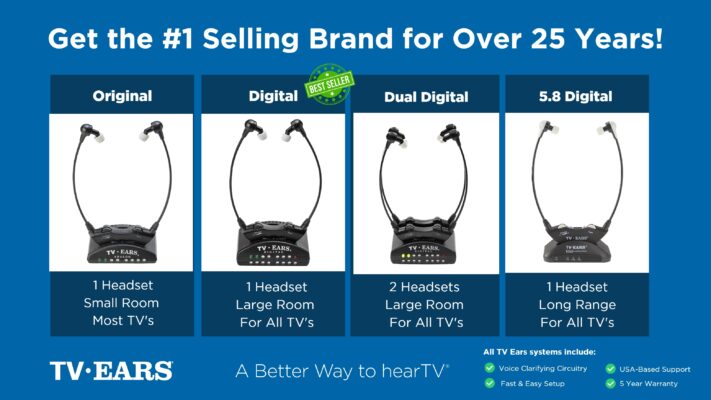 Ready to take your TV audio to the next level? Explore our Wireless Headphones and Headsets collection today! And don’t miss our custom audiologist-designed speaker system. At TV Ears, we are committed to ensuring that everyone can enjoy TV to the fullest. Our range of speakers for TV and wireless headphones and headsets are designed to cater to diverse needs and preferences, making your home entertainment experience truly exceptional. Don’t let hearing difficulties or differing audio preferences hold you back from enjoying your favorite shows and movies. Explore TV Ears’ solutions and rediscover the joy of TV-watching.
Want More TV Audio Tips?
If you’re passionate about enhancing your TV-watching experience, you won’t want to miss our other blog posts. We regularly publish articles on the latest audio technology, home entertainment tips, and more. Check out our latest blogs below:
Enhance Your TV Viewing Experience with Wireless Headphones for Watching TV
Elevate Your TV Experience with TV Ears: The Ultimate Headphones for Televisions
Enjoy Ultimate Freedom with TV Ears: Enhance Your TV with Wireless Headphones
Don’t miss out on valuable insights and tips from TV Ears experts. Investing in the right speaker for your TV can dramatically enhance your home entertainment experience. Whether you’re an audiophile or simply want to enjoy your favorite shows and movies with exceptional sound, a speaker for TV is a worthwhile addition to your setup. Explore TV Ears’ wide range of speakers, headphones and headsets today and start enjoying TV like never before.
Frequently Asked Questions
Why would anyone want to become deaf? It seems so extreme. It’s a question that can be hard to wrap your head around, but this desire almost never comes from a simple preference for quiet. Instead, it’s often a sign of deep distress. For some, it’s a desperate attempt to escape the physical pain caused by sound-sensitivity conditions like hyperacusis. For others, it can be tied to a psychological need to find a safe space away from an overwhelming world or to feel a sense of belonging within the Deaf community. It’s less about wanting to lose a sense and more about trying to solve a much deeper problem.
I don’t want to be deaf, but everyday sounds can be overwhelming for me. Is there a name for that? Yes, and you’re not alone in feeling this way. What you’re describing could be related to a couple of known conditions. One is hyperacusis, which is an extreme sensitivity to everyday sound levels. Another is misophonia, which involves having a strong, negative emotional reaction to specific sounds, like chewing or typing. These are real medical issues, and an audiologist or doctor can help you understand what’s going on and find strategies to manage it.
What are some safe ways to get relief from constant noise? If your goal is simply to find some peace and quiet, you have great options that don’t involve any permanent harm. High-quality earplugs are perfect for turning down the volume in loud environments like concerts or city streets. For creating your own quiet space at home or in the office, noise-canceling headphones are a game-changer. These tools give you control over your sound environment, allowing you to find relief whenever you need it.
Is struggling to hear the TV a sign of permanent hearing damage? It can certainly be one of the first signs people notice. Having trouble distinguishing dialogue from the music and sound effects in a show is a classic symptom of the kind of gradual hearing loss many people experience over time. While it’s always a good idea to get your hearing checked by a professional, it’s also a very common issue with very effective solutions designed specifically to make TV audio clear again.
How are TV listening systems different from standard hearing aids? That’s a great question. Think of it like this: hearing aids are sophisticated medical devices designed to amplify all the sounds around you for all-day wear. A TV listening system, on the other hand, is a specialist tool. Its one job is to take the audio directly from your television, clarify the dialogue, and send that crystal-clear sound straight to your ears. This allows you to control the TV volume for yourself without making it too loud for everyone else in the room.
Key Takeaways
- Explore the ‘Why’ Behind the Desire for Silence: A wish for deafness often points to underlying issues like extreme sound sensitivity or psychological distress. Speaking with a doctor or mental health professional is the first step toward finding safe solutions that address the real problem.
- Recognize That Intentional Hearing Damage is Irreversible: Any action taken to destroy your hearing will cause permanent damage and can lead to severe complications like chronic infections, tinnitus, and balance issues. The delicate structures in your inner ear do not grow back.
- Use Safe Tools to Control Your Auditory World: You can find peace and quiet without resorting to self-harm. Use noise-canceling headphones for immediate relief, and if you’re seeking community, consider learning ASL to respectfully engage with Deaf culture.