Many of us have a portable Bluetooth speaker we love for playing music. It’s convenient, wireless, and sounds great. This often leads to a brilliant question: can you use that same device to improve your TV’s audio? The short answer is yes, but it’s not always a perfect solution. Issues like audio lag, battery life, and sound quality can turn a simple idea into a frustrating experience. Before you try it, let’s go over the details. We’ll explore the right way to use a bluetooth speaker for tv, what to watch out for, and how it compares to other dedicated audio solutions.
Why Upgrading Your TV Audio Matters
Have you ever found yourself leaning in, straining to hear the dialogue in a movie, only to be blasted out of your seat by a sudden explosion? You’re not alone. The truth is, while television screens have become incredibly thin and sleek, the built-in speakers have often paid the price. There’s simply not enough physical space in that slim frame to house speakers that can produce rich, clear, and dynamic sound. This is why upgrading your TV audio isn’t just a luxury for audiophiles; it’s a practical step toward a more enjoyable and less frustrating viewing experience for everyone in the room.
Improving your TV’s sound can transform your nightly viewing from a muddled mess into a crystal-clear experience. It’s about catching every whispered secret in a tense drama and feeling the full impact of a film’s score. More importantly, it can solve the common household debate over the volume control. Instead of constantly turning the volume up and down, a dedicated sound system can provide the clarity needed to hear dialogue perfectly, even at lower volumes. This means one person doesn’t have to blast the sound just to understand the words, making TV time more peaceful for everyone involved.
The Limits of Built-in TV Speakers
As much as we love our beloved televisions, their built-in speakers often leave a lot to be desired. Manufacturers focus on creating the best possible picture quality in the thinnest possible design, which means audio components are often an afterthought. These internal speakers are typically small, underpowered, and downward- or rear-facing, causing the sound to bounce off walls and furniture before it even reaches your ears. This results in audio that can sound tinny, flat, and muffled, making it especially difficult to distinguish spoken words from background music and sound effects.
This is a common frustration that leads many to simply crank up the volume. However, increasing the volume on poor-quality speakers doesn’t necessarily make the sound clearer; it just makes the muddled audio louder. If you find it challenging to follow conversations on screen or if you’re constantly asking, “What did they just say?” it’s likely not your hearing, but the speakers that are the problem. An external audio solution is designed specifically to overcome these limitations and deliver the crisp, direct sound that your TV alone simply cannot produce.
Understanding the Different Types of TV Speakers
When you decide to upgrade your TV’s sound, you’ll find a few main options waiting for you. The most common choices are soundbars, portable Bluetooth speakers, and full home theater systems. Each one offers a different level of performance, complexity, and cost, so the right choice really depends on your specific needs and how you like to watch. A soundbar is a fantastic starting point for most people, offering a significant and immediate improvement in a simple package. For those who want a more flexible or budget-friendly option, a portable speaker might work, though it comes with some trade-offs.
On the other end of the spectrum, a full home theater system provides the most immersive, cinema-like experience possible, but it requires more space, a bigger budget, and a more involved setup. Thinking about what you want to achieve—whether it’s just clearer dialogue for the nightly news or feeling every rumble of a blockbuster action movie—will help you determine which type of speaker system is the best fit for your living room and your lifestyle. Let’s break down what each of these options brings to the table.
Soundbars: The Popular Choice for Clearer Dialogue
Soundbars are the most popular solution for a reason: they offer a simple and effective way to dramatically improve your TV audio. A soundbar is a long, slim speaker system that sits below your TV, giving you richer sound and much clearer dialogue compared to the small speakers built into your television. Most soundbars contain multiple speakers within a single unit, which are engineered to separate dialogue from other sounds, pushing conversations to the forefront so they’re easier to understand. Many models even have a dedicated “voice enhancement” or “dialogue” mode to make speech extra crisp.
The setup is typically straightforward, often requiring just a single cable to connect to your TV. This makes them an excellent choice for anyone who wants better sound without the clutter and complexity of a multi-speaker system. Whether you’re catching up on your favorite series or watching a movie, a soundbar ensures you won’t miss a single word. It’s a focused upgrade that directly addresses the most common complaint about modern TV audio, making it a practical and powerful addition to any entertainment setup.
Portable Bluetooth Speakers: Pros and Cons for TV Use
Using a portable Bluetooth speaker for your TV can seem like a convenient and budget-friendly idea, especially if you already own one. The setup is wireless and simple, and you can easily move the speaker around the room or take it with you for other uses. However, this flexibility comes with some significant downsides for regular TV viewing. One of the main issues is audio lag, or latency, where the sound is slightly out of sync with the picture on the screen. This delay can be incredibly distracting, especially when watching people speak.
Furthermore, most portable speakers are battery-powered, which means you’ll need to remember to keep them charged. It’s hard to find a soundbar that is both battery-powered and truly good for TV use, as they are designed for different purposes. While a portable speaker can be a temporary fix or a good option for a secondary TV, it generally doesn’t provide the consistent, high-quality, and perfectly synced audio experience that a dedicated soundbar or home theater system offers for your main entertainment center.
Full Home Theater Systems
For those who want the ultimate, most immersive audio experience, a full home theater system is the way to go. This setup, often called a “surround sound” system, involves multiple speakers strategically placed around your room. A typical system includes a center speaker for clear dialogue, front left and right speakers for the main soundtrack, rear speakers for ambient sounds, and a subwoofer for deep bass. This arrangement makes you feel like you’re right in the middle of the action, with sounds coming from all directions, just like in a real movie theater.
Many modern systems use advanced technologies like Dolby Atmos and DTS:X to create an even more realistic, three-dimensional soundscape. However, this premium experience comes with higher costs, more complexity, and the need for more space. You’ll have to run wires to multiple speakers (though some systems offer wireless rear speakers) and calibrate the system to your room. It’s a fantastic choice for dedicated movie lovers, but it might be more than what’s needed for someone simply looking to hear their daily shows more clearly.
Common Questions About TV Audio Setups
As you start exploring audio upgrades, you’ll likely run into some common questions and confusing terminology. For instance, what exactly makes a soundbar better than the speakers you already have? And what’s the difference between a “Bluetooth speaker” and a “wireless speaker”? These are great questions, and understanding the answers can help you make a more confident decision. The world of audio has its own language, but you don’t need to be an expert to grasp the basics. Getting clear on these key distinctions will ensure you choose a system that truly meets your needs.
Think of this as your quick-start guide to the most frequent queries. We’ll clarify the practical differences between various setups and technologies in simple terms. Whether you’re trying to decide between a soundbar and your TV’s built-in audio or figuring out what “wireless” really means in the context of home theater, we’ve got you covered. By the end of this section, you’ll have a solid foundation to help you find the perfect audio solution for your home.
Soundbar vs. TV Speakers: What’s the Real Difference?
The difference between using a soundbar and relying on your TV’s built-in speakers is night and day. TV speakers are small and constrained by the television’s thin design, leading to weak and often unclear sound. A soundbar, on the other hand, is a dedicated piece of audio equipment designed for one purpose: to produce great sound. Soundbars improve how clear voices are by using larger, higher-quality speakers and often a dedicated center channel specifically for dialogue. This means you can finally stop relying on subtitles to follow the conversation.
Beyond dialogue clarity, soundbars also make bass deeper and create impressive surround sound effects, making movies and shows feel more immersive. Even a basic soundbar will provide a richer, fuller, and more dynamic audio experience than what your TV can produce on its own. It’s a focused upgrade that solves the biggest audio problem with modern TVs, delivering sound that is both clearer for conversations and more powerful for action scenes, all from one simple device.
Bluetooth Speaker vs. Wireless Speaker: A Quick Guide
The terms “Bluetooth speaker” and “wireless speaker” are often used interchangeably, but they can mean different things, especially in a home theater context. A Bluetooth speaker is a specific type of wireless speaker that uses Bluetooth technology to connect to a source, like your phone or TV. They are designed to be portable and easy to use, making them great for music on the go. However, as we’ve discussed, they can sometimes have audio lag when used with a TV.
When people talk about “wireless speakers” for a home theater system, they are often referring to speakers that connect to a central hub or soundbar using a dedicated Wi-Fi network, not Bluetooth. This type of connection is more stable and robust, eliminating the audio sync issues that can plague Bluetooth. So, while all Bluetooth speakers are wireless, not all wireless home theater speakers use Bluetooth. This distinction is important if you’re looking for a reliable, high-performance audio setup for your television.
How to Connect Your Speaker to Your TV
Once you’ve chosen your new speaker, the next step is connecting it to your TV. Thankfully, this process has become much simpler over the years. You generally have three main options: HDMI, optical, and Bluetooth. The best choice depends on the ports available on your TV and sound system, as well as your desire for the highest possible audio quality versus wireless convenience. Each method has its own set of benefits, and understanding them will help you get the best performance out of your new gear.
Don’t worry if you’re not a tech expert—connecting a speaker is usually a plug-and-play affair. Most new soundbars and TVs will guide you through the process. We’ll walk through each connection type so you know what to look for and why you might choose one over the other. From the top-tier quality of HDMI to the simple convenience of Bluetooth, you’ll be able to get your system up and running in no time.
HDMI: The Best Option for High-Quality Audio
For the best possible sound quality, an HDMI cable is your top choice. Specifically, you’ll want to use a port labeled “HDMI ARC” or “eARC” (Audio Return Channel). This special type of HDMI connection not only sends high-resolution audio from your TV to your speaker but also allows you to control your soundbar’s volume using your regular TV remote. This seamless integration is incredibly convenient and simplifies your daily use, as you won’t need to juggle multiple remotes.
HDMI eARC is the newest standard and supports the most advanced audio formats, like Dolby Atmos, giving you the most immersive sound possible. If you’ve invested in a high-quality soundbar or home theater system, using an HDMI ARC or eARC connection is the best way to ensure you’re getting the full audio experience you paid for. It’s a single-cable solution that delivers both top-tier sound and user-friendly control.
Optical Connection: A Reliable Alternative
If your TV doesn’t have an HDMI ARC port, or if you’re already using it for another device, an optical connection is an excellent and reliable alternative. An optical cable uses light to transmit a digital audio signal from your TV to your speaker, providing very clear and high-quality sound. It can handle standard surround sound formats, making it a big step up from older analog connections. Many people prefer an optical connection for its stability and widespread availability on both older and newer devices.
The main drawback compared to HDMI ARC is that you won’t be able to control the speaker’s volume with your TV remote; you’ll need to use the remote that came with your soundbar. However, the audio quality is still fantastic, and the setup is just as simple: plug one end of the cable into the TV’s optical out port and the other into the speaker’s optical in port. It’s a dependable choice that guarantees a great listening experience.
Bluetooth: The Convenience Factor
For the ultimate in simplicity and a cord-free setup, connecting your speaker via Bluetooth is the easiest option. There are no wires to worry about—you simply pair your speaker with your TV through the settings menu, just like you would with your smartphone. This is a great feature if you want to place your speaker somewhere that isn’t right next to the television or if you simply want to avoid cable clutter. The convenience factor is undeniable, as setting up Bluetooth speakers is a breeze.
However, this convenience can come with a trade-off. Bluetooth compresses the audio signal, which can result in slightly lower sound quality compared to a wired connection like HDMI or optical. There’s also the potential for a slight delay between the video and audio, known as latency, which can be distracting. For casual viewing or for users who prioritize a clean, wireless look, Bluetooth is a perfectly fine choice, but for the best performance, a wired connection is usually recommended.
Decoding Modern Sound Technology
When you start shopping for a new sound system, you’ll encounter a lot of technical terms and brand names like Dolby Atmos, DTS:X, and AI Sound Pro. It can feel a bit like learning a new language, but these features are all designed with one goal in mind: to make your listening experience better and more immersive. Understanding what these technologies do can help you decide which features are important to you and which ones you can live without. You don’t need to be an engineer to get the gist of it.
We’ll break down some of the most common features you’ll see on the box. From technologies that create a three-dimensional bubble of sound to smart systems that automatically adjust the audio for you, these innovations are what separate modern sound systems from older models. Think of this as your cheat sheet to the latest and greatest in home audio, so you can choose a system that delivers the exact kind of experience you’re looking for.
Features for an Immersive, Theater-Like Experience
Modern sound systems are packed with features designed to replicate the immersive experience of a movie theater right in your living room. The goal is to move beyond simple stereo sound and create a soundscape that feels like it’s happening all around you. This is achieved through a combination of advanced audio formats and clever speaker design. These technologies work together to place sounds precisely in the space around you, making you feel like you’re part of the action on screen rather than just watching it.
Dolby Atmos and DTS:X Explained
Dolby Atmos and DTS:X are two of the leading “object-based” surround sound technologies. Instead of assigning sound to specific channels (like front-left or back-right), these formats treat sounds as individual objects that can be placed and moved anywhere in a three-dimensional space. This includes overhead, which is what creates that incredible sense of height and immersion. Imagine hearing rain that sounds like it’s actually falling on your roof or a helicopter that seems to fly right over your head. That’s the magic of Dolby Atmos and DTS:X, and it’s the closest you can get to theater-quality sound at home.
How Up-Firing and Center Speakers Create 3D Sound
So how do soundbars create that overhead sound without you having to install speakers in your ceiling? Many achieve this with “up-firing” speakers. These are speakers built into the top of the soundbar that are angled to bounce sound off your ceiling and down to your listening position. This clever trick creates the illusion of height and is a key component of a Dolby Atmos or DTS:X experience. Additionally, a dedicated center speaker within the soundbar is crucial for anchoring dialogue to the screen, ensuring that no matter how chaotic the action gets, the voices remain clear and centered.
Smart Features for Optimized Listening
Beyond creating immersive sound, many modern audio systems include smart features that automatically optimize the listening experience for you. These technologies use microphones and intelligent processing to analyze what you’re watching and the acoustics of your room, then adjust the sound settings in real-time. This means you get the best possible audio without having to fiddle with complicated menus or equalizers. It’s all about making great sound effortless, so you can just sit back and enjoy the show.
AI Sound Pro and Room Calibration
Features like AI Sound Pro listen to the type of content you’re watching—be it a movie, sports, or the news—and automatically adjust the audio profile for the best experience. For example, it might enhance dialogue for a talk show or widen the soundstage for a blockbuster film. Similarly, room calibration technology uses built-in microphones to analyze how sound reflects off the walls and furniture in your specific room. It then tunes the speaker’s output to compensate for your room’s unique acoustics, ensuring the sound is balanced and clear no matter where you’re sitting.
Voice Assistant and Streaming Integration
Many modern soundbars and speakers come with popular voice assistants like Amazon Alexa and Google Assistant built-in. This allows for hands-free control, so you can use your voice to play music, change the volume, or even ask for the weather without searching for the remote. They also often have built-in streaming capabilities, allowing you to easily play music from services like Spotify or Apple Music directly through your sound system, turning it into a versatile hub for all your audio entertainment.
Expanding Your Setup: Subwoofers and Rear Speakers
If you start with a soundbar, you often have the option to expand your system later on for an even more immersive experience. Many soundbars are designed to work wirelessly with optional subwoofers and rear speakers. This modular approach allows you to build up your home theater over time as your budget and desires grow. Adding these components can take your sound from great to truly cinematic, filling your room with deep, rumbling bass and true surround sound that puts you right in the middle of the action.
This flexibility is one of the great advantages of modern audio systems. You can start with a simple, effective upgrade and then decide later if you want to take it to the next level. A subwoofer will add that low-end impact that you can feel, while rear speakers will complete the surround sound bubble. Let’s look at what each of these components adds to the experience.
Adding a Subwoofer for Deeper Bass
A subwoofer is a specialized speaker designed to reproduce only low-frequency sounds—the deep rumbles and thumps you feel in an action movie or the driving beat in a piece of music. While many soundbars have decent bass on their own, a separate subwoofer can produce much deeper and more powerful low-end frequencies. This adds a physical, tactile dimension to your viewing experience, making explosions feel more impactful and soundtracks more robust. Many soundbars come bundled with a wireless subwoofer, making setup incredibly easy.
However, not everyone wants or needs a separate, bulky subwoofer. If you live in an apartment with thin walls or simply prefer a more minimalist setup, a 2.0 soundbar (one without a subwoofer) might be a good option. These soundbars are designed to produce balanced sound on their own and can still be a massive improvement over your TV’s speakers. It all comes down to personal preference and your living situation.
Using Rear Speakers for True Surround Sound
While many soundbars can create a virtual surround sound effect by bouncing sound off walls, nothing beats the real thing. Adding a pair of dedicated rear speakers provides true surround sound by placing speakers physically behind you. This is what completes the immersive audio bubble, allowing sounds to move seamlessly from the front of the room to the back. You’ll hear spaceships flying past you, crowds cheering around you, and subtle ambient noises that make the world on screen feel much more real.
Many modern systems allow you to connect rear speakers wirelessly to your soundbar, which eliminates the hassle of running long cables across your living room. If you’re a movie lover who wants the most cinematic experience possible, adding rear speakers is the final piece of the puzzle that transforms your setup into a genuine home theater.
Practical Tips for Choosing Your Speaker
Choosing the right speaker system can feel overwhelming with so many options available. However, you can simplify the process by focusing on a few key factors: your budget, your room, and your listening habits. There’s no single “best” speaker for everyone; the right choice is the one that fits your space, meets your needs, and doesn’t break the bank. Before you start shopping, take a moment to think about what you really want to achieve.
Are you primarily looking for clearer dialogue for your nightly news and dramas? Or are you a movie buff who wants to feel every explosion? Answering these questions will help you narrow down your options and focus on the features that matter most to you. Let’s go over some practical tips to guide you toward the perfect audio upgrade for your home.
Setting Your Budget: What to Expect
Your budget is one of the most important factors in choosing a speaker system. The good news is that you don’t have to spend a fortune to get a significant improvement in sound quality. You can find excellent entry-level soundbars that will be a huge step up from your TV’s speakers. As you increase your budget, you’ll find systems with more advanced features, better build quality, and more immersive sound, including options with subwoofers and support for Dolby Atmos.
Understanding Common Price Ranges ($300-$700)
A budget between $300 and $700 is a fantastic sweet spot for getting a high-quality soundbar system. In this range, you can expect to find soundbars that offer excellent dialogue clarity, powerful sound, and features like a wireless subwoofer for deep bass. Many models in this price bracket also include advanced functionalities like Dolby Atmos, HDMI eARC for seamless integration with your TV, and smart features like voice assistant compatibility. This budget allows you to move beyond the basics and get a system that delivers a truly impressive and immersive home theater experience.
Considering Your Space and Listening Habits
The physical space where you watch TV plays a big role in what kind of speaker system will work best. A large, open-concept living room might benefit from a more powerful system with a wide soundstage, while a small den or bedroom might be perfectly served by a compact soundbar. Also, think about your personal listening habits. If you often watch TV late at night while others are sleeping, a system with a “night mode” that quiets loud sounds while keeping dialogue clear can be a lifesaver.
Ultimately, if the main goal is simply to hear the TV clearly without disturbing others, you might find that even the best speaker system doesn’t solve the core issue. This is where a personal listening device, like a TV Ears headset, can be a perfect solution. It delivers crystal-clear audio directly to your ears, allowing you to set the volume exactly where you need it, while everyone else in the room can listen at a comfortable level or in complete silence. It’s a simple, effective way to ensure a peaceful and enjoyable viewing experience for everyone.
The Downside of Using a Portable Speaker for Your TV
While it might be tempting to use a portable Bluetooth speaker you already own, it’s important to remember they aren’t designed for permanent TV use. The biggest issue is that most soundbars need to be plugged into an outlet for consistent power. Relying on a battery-powered portable speaker means you’ll constantly have to worry about charging it, and it could die in the middle of a movie. Furthermore, they often lack the specific audio processing features, like dialogue enhancement, that make dedicated soundbars so effective for watching television.
Directional vs. Omni-Directional Sound
When watching TV, you want sound that is directed toward you, the viewer. This is called directional sound. Soundbars and home theater systems are designed to do exactly this, focusing the audio on the listening area for maximum clarity and impact. In contrast, many portable Bluetooth speakers are designed to be omni-directional, meaning they send sound out in all directions to fill a room with music for a party. While great for tunes, this can make TV dialogue sound distant and less clear. For the best TV experience, especially if you want deeper bass and crisp speech, a directional speaker system is always the better choice.
Finding the Perfect Match: Top Bluetooth Speaker Picks
Alright, now that we’ve got you all hyped up about the wonders of Bluetooth speakers, it’s time to dive into some top picks that’ll take your home entertainment game to new heights. The Powerhouse JBL Boombox 2 For those who demand serious audio oomph, look no further than the JBL Boombox 2. This bad boy packs a punch with its booming bass and crystal-clear sound, making it perfect for movies, music, and everything in between. Plus, its rugged design means you can take the party anywhere without worrying about damaging your precious speaker. The Sleek Stunner Bose SoundLink Revolve+ II If you’re all about style and substance, the Bose SoundLink Revolve+ II is sure to catch your eye (and your ears). This sleek, cylindrical speaker delivers 360-degree sound that’ll fill any room with rich, immersive audio. And let’s not forget about its water-resistant design – perfect for those who like to take their tunes on the go. The Budget-Friendly Banger Anker Soundcore Motion+ Who says you have to break the bank for great sound? The Anker Soundcore Motion+ proves that you can get amazing audio quality without emptying your wallet. This compact yet mighty speaker delivers powerful bass and crisp highs, making it a fantastic choice for movie nights, gaming sessions, or just rocking out. The Bottom Line: Level Up Your Audio Game At the end of the day, folks, investing in a top-notch Bluetooth speaker is a game-changer for your home entertainment experience. Whether you’re a die-hard movie buff, a music aficionado, or just someone who appreciates great sound, these wireless wonders will take your audio to new heights. So, what are you waiting for? Ditch those wimpy TV speakers and embrace the power of Bluetooth audio. Your ears (and your neighbors) will thank you!
Not a Speaker Person? Try These Wireless TV Headphones
Discover the difference TV Ears wireless headphones and headsets can make in your TV-watching experience. Whether you’re looking for comfortable over-ear headphones or a compact, stylish headset, we have options to suit your needs. 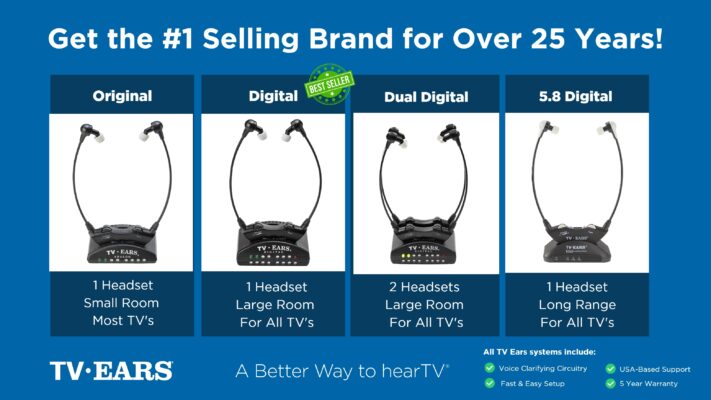 Ready to take your TV audio to the next level? Explore our Wireless Headphones and Headsets collection today! And don’t miss our custom audiologist-designed speaker system. At TV Ears, we are committed to ensuring that everyone can enjoy TV to the fullest. Our range of speakers for TV and wireless headphones and headsets are designed to cater to diverse needs and preferences, making your home entertainment experience truly exceptional. Don’t let hearing difficulties or differing audio preferences hold you back from enjoying your favorite shows and movies. Explore TV Ears’ solutions and rediscover the joy of TV-watching.
Ready for Better TV Audio? Read These Next
If you’re passionate about enhancing your TV-watching experience, you won’t want to miss our other blog posts. We regularly publish articles on the latest audio technology, home entertainment tips, and more. Check out our latest blogs below:
Enhance Your TV Viewing Experience with Wireless Headphones for Watching TV
Elevate Your TV Experience with TV Ears: The Ultimate Headphones for Televisions
Enjoy Ultimate Freedom with TV Ears: Enhance Your TV with Wireless Headphones
Don’t miss out on valuable insights and tips from TV Ears experts. Investing in the right speaker for your TV can dramatically enhance your home entertainment experience. Whether you’re an audiophile or simply want to enjoy your favorite shows and movies with exceptional sound, a speaker for TV is a worthwhile addition to your setup. Explore TV Ears’ wide range of speakers, headphones and headsets today and start enjoying TV like never before.
Frequently Asked Questions
Can I use any portable Bluetooth speaker I already own with my TV? You certainly can, and it’s a simple way to get sound that’s better than what your TV offers. However, it’s often not a perfect long-term solution. You might notice a slight delay where the audio doesn’t quite match the actors’ lips, which can be distracting. You’ll also need to keep the speaker charged, as most are battery-powered and aren’t designed to be plugged in all the time.
What’s the main reason a soundbar is so much better than my TV’s built-in speakers? The biggest difference is clarity, especially with voices. TV speakers are small and often face down or backward, which muffles sound. A soundbar is a dedicated audio device with larger, forward-facing speakers designed to separate dialogue from background noise. This means you can hear conversations clearly without having to constantly adjust the volume for loud action scenes.
I see terms like “HDMI ARC” and “Optical.” Does it really matter which cable I use? Yes, it can make a difference in convenience. Using an HDMI ARC connection is usually the best choice because it allows you to control your soundbar’s volume with your existing TV remote. An optical cable provides excellent sound quality as well, but you’ll likely need to use the separate remote that came with your soundbar to adjust the volume.
All these features like Dolby Atmos sound complicated. Do I actually need them? For most people, the main goal is simply to hear dialogue more clearly, and you don’t need the most advanced features for that. Technologies like Dolby Atmos are fantastic for creating a theater-like, immersive experience, which is great for movie lovers. But if your primary frustration is just understanding what characters are saying, even a basic soundbar without those extra features will make a huge improvement.
What if I get a new speaker, but my family still argues about the volume? This is a very common situation. A soundbar will make the audio clearer for everyone, but it won’t solve disagreements over the ideal volume level. If one person needs the TV much louder than others, a personal listening device might be the best solution. A headset like TV Ears delivers clear audio directly to the user, allowing them to set their own perfect volume without disturbing anyone else in the room.
Key Takeaways
- Focus on Clarity, Not Just Volume: If you find yourself turning up the TV just to hear the dialogue, the problem is likely the speakers, not your hearing. Your TV’s built-in speakers muddle sound, so increasing the volume only makes that muddled sound louder.
- Choose a Speaker Designed for TV: A portable Bluetooth speaker can seem like an easy fix, but it often creates a frustrating audio delay. A soundbar is specifically engineered to enhance dialogue and sync perfectly with your screen, making it a far more reliable choice for watching shows and movies.
- Use an HDMI ARC Cable for the Best Experience: To get the highest quality sound and the most convenient setup, connect your speaker using an HDMI ARC port. This single cable allows you to control the volume with your TV remote, so you don’t have to juggle multiple controllers.