There’s nothing more frustrating than settling in to watch a movie, only to realize you can’t quite make out the dialogue. You keep asking, “What did they say?” or find yourself constantly reaching for the rewind button. When sounds become muffled and conversations on screen get lost, it can take the joy out of entertainment. This experience is incredibly common and often points to a gradual change in hearing. The good news is that you don’t have to accept it. Taking the first step toward clarity is easier than you think. We’ll cover how to get answers and explore the different options available, including specialized assistive listening devices near me designed specifically for television.
Understanding Hearing Loss
If you’ve found yourself cranking up the TV volume or asking people to repeat themselves more often, you might be dealing with hearing loss. It’s a common condition that affects millions of people, and it often develops so gradually that you barely notice it at first. Recognizing the signs is the first step toward finding a solution that brings clarity back to your conversations and entertainment. Hearing loss isn’t just about sounds being quieter; it can also affect your ability to distinguish between different sounds, making dialogue on television or conversations in a crowded room sound muffled and unclear. Understanding what’s happening can help you feel more in control and ready to explore your options.
How Common is Hearing Loss?
You are far from alone if you suspect your hearing isn’t what it used to be. Hearing loss is incredibly common, especially as we get older. In fact, research shows that about 40% of people over 50 experience some form of it. For many, the change is subtle—a word missed here, a TV show character’s line misunderstood there. Because it happens slowly, it’s easy to dismiss it as just a part of aging. But acknowledging it is the first step toward improving your quality of life and ensuring you don’t miss out on the little moments, whether it’s a grandchild’s whisper or the punchline of your favorite sitcom.
Common Causes and Its Impact on Daily Life
Hearing loss simply means you can’t hear as well as you used to. This can manifest in different ways, but a classic sign is needing the TV louder than everyone else in the room, which can lead to the all-too-familiar “volume war” at home. You might also find it difficult to follow conversations, especially in noisy environments like restaurants. The most common cause is age-related change, but long-term exposure to loud noise can also contribute. This can be frustrating and isolating, but simple solutions can make a world of difference. For instance, an assistive listening device like TV Ears can deliver crisp, clear television audio directly to you, allowing you to listen at your perfect volume without disturbing anyone else.
What to Do if You Suspect Hearing Loss
Realizing you might have hearing loss can feel a bit overwhelming, but figuring out your next steps doesn’t have to be. There is a clear path to getting answers and finding the right support for your needs. Taking a proactive approach will help you address the issue head-on and get back to enjoying the sounds around you with confidence. The process usually starts with a simple conversation with your doctor and can lead to specialized care if needed. By following these steps, you can get a clear diagnosis and a personalized plan to manage your hearing, ensuring you stay connected to the people and activities you love.
The First Step: Talk to Your Doctor
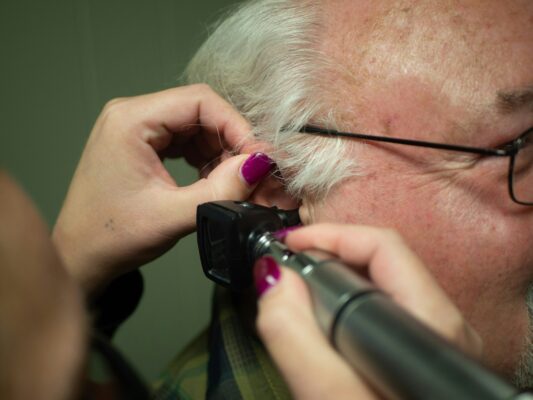
Your first stop should be your primary care doctor. Before jumping to conclusions, it’s important to rule out simple, reversible causes. When you see your doctor, be sure to explain how your hearing difficulties are affecting your daily life. They can perform an initial examination to check for common issues like a buildup of ear wax or an infection, both of which can temporarily muffle your hearing. If a simple cause is found, it can often be treated right in the office. If not, your doctor will know exactly where to send you for a more thorough evaluation.
Seeing a Specialist for a Hearing Assessment
If your doctor determines there isn’t a simple cause for your hearing issues, they will likely refer you to a specialist for a complete hearing assessment. This specialist is typically an audiologist or an Ear, Nose, and Throat (ENT) doctor. They have the expertise and equipment to conduct a comprehensive hearing test, which is a painless and straightforward process. This test will pinpoint the exact nature and degree of your hearing loss. The results will help the specialist identify the cause and recommend the best course of action, whether that involves hearing aids, other assistive devices, or different treatment options.
How to Find a Local Hearing Professional
Finding the right specialist is a key part of the process. Your doctor will likely provide a referral, but you can also do your own research to find a professional you feel comfortable with. A great way to start is by using online directories that offer reviews and information on local clinics. For example, websites like Healthy Hearing provide unbiased reviews and listings for audiology clinics in your area, making it easier to find a trusted specialist nearby. Reading about other patients’ experiences can give you the confidence you need to book that first appointment and take a positive step toward better hearing.
Many Options Beyond Basic Hearing Aids Near Me
When most people think of hearing loss solutions, basic “hearing aids near me” from a local provider come to mind. However, for watching TV, complex hearing aids can be expensive and aren’t designed specifically for listening to broadcast audio. Thankfully, there are now many devices aimed directly at helping the hearing impaired listen better at home.
Types of Hearing Devices
Navigating the world of hearing assistance can feel overwhelming, but it helps to know the main categories of devices available. Each type is designed for different needs and levels of hearing loss, from highly customized medical devices to solutions for specific situations. Understanding the key differences between prescription hearing aids, over-the-counter options, and assistive listening devices is the first step in finding the right fit for you or a loved one. This knowledge will help you have a more informed conversation with a hearing professional and choose a solution that truly improves your daily life, especially when it comes to enjoying your time at home.
Prescription Hearing Aids
When you need a solution tailored specifically to your unique hearing profile, prescription hearing aids are the gold standard. These are sophisticated electronic devices that an audiologist or hearing specialist custom-fits and tunes for your exact level of hearing loss. Think of it like getting a custom suit versus buying one off the rack; the personalized fit offers the best possible results. Because they are fitted by experts, they can address a wide range of hearing issues, from mild to severe. The process involves a thorough hearing evaluation, ensuring the device is programmed to amplify the specific frequencies you struggle with, providing clarity across different listening environments.
Over-the-Counter (OTC) Hearing Aids
A relatively new option, over-the-counter (OTC) hearing aids are designed for adults with perceived mild to moderate hearing loss. You can purchase them directly from stores or online without a prescription or a visit to a hearing specialist. They are generally less expensive than their prescription counterparts and are often set up using a smartphone app, giving you some control over the settings. While they offer a more accessible and affordable entry point into hearing assistance, they are less personalized. They provide general sound amplification rather than the fine-tuned support of a prescription device, making them a good starting point for some but not a comprehensive solution for all.
Assistive Listening Devices (ALDs) and PSAPs
Unlike hearing aids, which are designed for all-day use in various settings, assistive listening devices (ALDs) are built to help you hear better in specific situations. Also known as Personal Sound Amplification Products (PSAPs), these devices are not custom-made for an individual’s hearing loss and often use preset settings to clarify sound. For example, if your main struggle is understanding dialogue on television, a specialized ALD like TV Ears is a perfect fit. It focuses solely on amplifying and clarifying TV audio, sending it directly to a headset. This allows you to set your own volume without making the TV too loud for others in the room, solving a common household problem simply and effectively.
What to Expect at a Hearing Clinic
If you’re considering a prescription hearing aid or simply want a professional opinion on your hearing health, a visit to a hearing clinic is your next step. It’s a place dedicated to diagnosing and treating hearing-related issues, staffed by audiologists and hearing instrument specialists. These professionals are there to guide you through the process, from initial testing to finding the right device and providing ongoing support. Think of it as a comprehensive resource center for your ears. The goal is to understand your specific challenges and provide solutions that improve your ability to communicate and connect with the world around you.
Services for Hearing Health
A hearing clinic offers much more than just selling hearing aids. Professionals there conduct full diagnostic tests to determine the cause and extent of any hearing problems you might be experiencing. Based on these results, they can help you choose the most suitable hearing aid, then fit and program it for your needs. Their support doesn’t stop there; they also provide services for maintaining and repairing your devices to ensure they continue to work effectively. This ongoing relationship is key to successfully adapting to a new hearing device and getting the most benefit from your investment in better hearing.
Products for Hearing Protection
Beyond treating hearing loss, a key function of a hearing clinic is prevention. Hearing health professionals are passionate about helping people protect their hearing from damage in the first place. To do this, they often sell custom-fitted earmolds and earplugs designed for various noisy environments. Whether you’re a musician, work in a loud factory, enjoy swimming, or just want to protect your ears at concerts, custom protection offers a much better seal and comfort than generic earplugs. Taking proactive steps to prevent noise-induced hearing loss is one of the best things you can do for your long-term health.
Costs and Insurance Coverage for Hearing Aids
One of the biggest questions people have when exploring hearing solutions is about the cost and what, if any, insurance will cover. The price of hearing aids can vary dramatically depending on the technology and level of customization, and reviewing insurance policies can be tricky. It’s important to go into the process with a clear understanding of the potential expenses and what financial assistance might be available. Knowing the facts about Medicare coverage and other options can help you budget appropriately and find a solution that works for both your hearing needs and your wallet.
Understanding Original Medicare and Hearing Aids
It’s a common misconception that Medicare covers all healthcare needs for seniors, but when it comes to hearing, that’s not the case. It’s important to know that Original Medicare (Part A and Part B) does not pay for hearing aids or the exams required for fitting them. This can come as a surprise to many people and is a significant factor to consider when planning for hearing care. Because hearing aids are a major out-of-pocket expense for most people on Original Medicare, it’s essential to explore all other avenues for coverage or assistance before making a purchase.
How Medicare Advantage Plans Can Help
While Original Medicare falls short, there is another option that may offer some relief. Many Medicare Advantage Plans, also known as Part C, provide extra benefits not covered by Original Medicare. These plans are offered by private insurance companies approved by Medicare and often include coverage for vision, dental, and hearing services. If you are enrolled in or considering a Medicare Advantage Plan, be sure to check the specific details of the policy. The level of hearing aid coverage can vary widely from plan to plan, but it could significantly reduce your out-of-pocket costs.
Free Screenings and Trial Periods
The high cost of hearing aids can make people hesitant to even take the first step, but many hearing clinics try to make the process easier. You can often get a free hearing screening to get a baseline understanding of your hearing health without any financial commitment. Furthermore, when you do decide to purchase hearing aids, most providers offer a trial period of 30 to 60 days. This allows you to test the devices in your everyday life to ensure they’re the right fit for you. Most hearing aids also come with a two- to three-year warranty that covers service and repairs, providing peace of mind for your investment.
TV Ears – The Premier Name in TV Listening Systems
Leading the way in quality TV listening devices is TV Ears. With years of expertise in selling assistive listening systems, TV Ears focuses specifically on solutions to help the hearing impaired listen to television audio clearly. The TV Ears systems provide much more amplification and audio enhancement capability over basic “hearing aids near me,” allowing you to hear every word with no more frustration.
Amazing Technology to Enhance TV Audio
So how exactly does TV Ears provide such exceptional improvements to TV audio compared to standard “hearing aids near me”? Their latest systems, including the TV Ears 5.0, utilize a combination of key technologies to clarify audio and customize it to your hearing needs:
- Voice Clarifying – This special circuitry separates speech from background noise for easy listening without constant volume adjustments. No more “what did they say?” moments again!
- Tone control – Like a hearing aid, you can adjust high and low frequencies specifically for your type of hearing loss. But TV Ears systems offer a much wider range of tone customization compared to typical “hearing aids near me” for dialing TV audio in precisely.
- Multi-channel support – Many TV listening devices mix stereo audio channels down to one channel. However, TV Ears systems can use both channels for enhanced sound dimension that doesn’t mush voices and music together.
- Noise Reduction – Further cleans up audio by filtering steady disruptive noises like fans or hums out of the background. That means you hear more actual TV audio and less annoying distractions.
- Surround Balance – Designed to work with home theater surround audio setups to properly clarify voices from center channels while still providing immersive sound dimension. You won’t miss a single line of dialogue even with complex multi-channel audio.
- Mobile Convenience – Many TV listening systems transmit audio signals directly to lightweight headsets or hearing aids using special wireless technology. This frees you to move around your home while still listening clearly. Some TV Ears models even offer rechargeable battery powered transmitters for total cordless mobility convenience.
Choosing the Right System
With advanced technology that beats typical hearing aids near me, TV Ears provides a line of products to meet varying hearing needs and budgets. Considerations when buying a TV listening system include:
- Audio Connection Types – Choices like direct headphone jacks, optical/SPDIF, or wireless connectivity with headsets and hearing aids
- Maximum Volume Gain in Decibels (dB) – More power to amplify softer audio for more severe hearing loss
- Accessory Options – Additional listening devices like headphones or hearing aid adapters for more flexibility
- Budget – Prices range from around $100 up to $300+ for more robust functionality
By determining your required audio boost, connectivity method and accessory needs, you can select the perfect TV Ears product to start hearing your entertainment again at any volume that suits your hearing level. No more constantly adjusting settings or missing dialogue when you have the right assistive listening device enhancing what your TV is putting out.
Additional Support and Resources
Learning New Communication Skills
Hearing loss can make personal conversations feel challenging, but you don’t have to miss out on connecting with loved ones. Beyond improving your TV experience, certain assistive listening devices (ALDs) are designed to make one-on-one communication much clearer. For individuals who may not be using hearing aids, some ALDs can be very helpful. These devices work by sending sound directly to the inner ear, which helps cut through background noise and clarify speech. This technology can benefit both the listener and the speaker, making your conversations less stressful and more enjoyable for everyone involved.
Other Assistive Devices for the Home
Your home is full of important sounds beyond the television. If you have trouble hearing the phone ring, the doorbell, or even smoke alarms, there are solutions available. In addition to hearing aids and TV listeners, you can find various assistive devices designed to amplify these specific sounds throughout your home. Depending on your level of hearing loss, some of these devices may even be available for free through local social services, so it’s worth looking into what your community offers. It’s helpful to remember that while these tools can significantly improve sound clarity, they are designed to assist your hearing, not restore it to normal levels.
Say Goodbye to Frustration – Better Hear Your Favorites Again!
Don’t let hearing loss rob you of TV entertainment you love. With uniquely designed sound enhancement technology that beats standard hearing aids near me, TV Ears systems help you stop missing important dialogue and music that make shows and movies enjoyable. Regain your freedom to watch subtitled foreign films, catch every punchline in late night talk shows and clearly hear play-by-play sports commentary again. Stop the timeouts to rewind and replay muddled lines or constantly bugging friends and family to repeat themselves. Instead, explore TV Ears assistive listening lineup today as a top-rated premier option for hearing impaired TV audio improvement from the comfort of your living room.
Find Your Ideal Wireless TV Headphones
Discover the difference TV Ears wireless headphones and headsets can make in your TV-watching experience. Whether you’re looking for comfortable over-ear headphones or a compact, stylish headset, we have options to suit your needs. 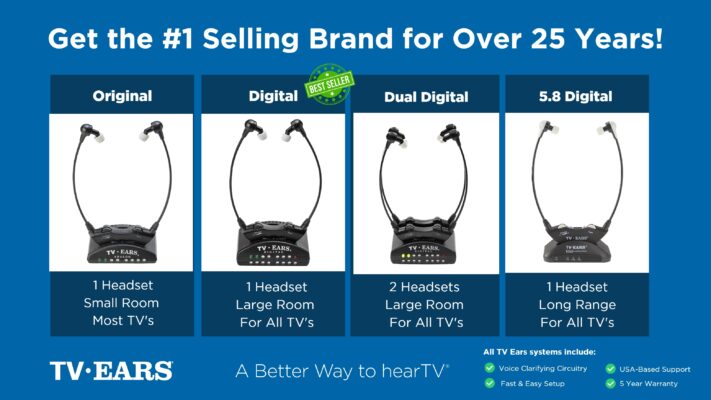 Ready to take your TV audio to the next level? Explore our Wireless Headphones and Headsets collection today! And don’t miss our custom audiologist-designed speaker system. At TV Ears, we are committed to ensuring that everyone can enjoy TV to the fullest. Our range of speakers for TV and wireless headphones and headsets are designed to cater to diverse needs and preferences, making your home entertainment experience truly exceptional. Don’t let hearing difficulties or differing audio preferences hold you back from enjoying your favorite shows and movies. Explore TV Ears’ solutions and rediscover the joy of TV-watching.
Want More TV Audio Tips?
If you’re passionate about enhancing your TV-watching experience, you won’t want to miss our other blog posts. We regularly publish articles on the latest audio technology, home entertainment tips, and more. Check out our latest blogs below:
The Wireless Wonders: Unleash the Magic of Wireless Headphones!
The Wireless Headphones for TV Experience: Elevate Your Entertainment!
Hear Every Word Clearly: Exploring Fun TV Listening Devices for Hearing Impaired
Don’t miss out on valuable insights and tips from TV Ears experts. Investing in the right speaker for your TV can dramatically enhance your home entertainment experience. Whether you’re an audiophile or simply want to enjoy your favorite shows and movies with exceptional sound, a speaker for TV is a worthwhile addition to your setup. Explore TV Ears’ wide range of speakers, headphones and headsets today and start enjoying TV like never before.
Frequently Asked Questions
What’s the real difference between TV Ears and a regular hearing aid? Think of it this way: hearing aids are generalists, designed to help you with all the sounds you encounter throughout your day, from conversations to traffic. TV Ears are specialists. They are designed with the single purpose of clarifying and amplifying television audio. They use specific technology to lift dialogue out of the background music and sound effects, which is a common struggle that standard hearing aids might not be optimized to handle.
Do I need to see a doctor or get a hearing test before I can use TV Ears? No, you don’t need a prescription or a doctor’s visit to purchase and use TV Ears. These are assistive listening devices, not medical devices. If you’ve identified that your primary struggle is hearing the television clearly, you can get a system and set it up yourself. Of course, if you suspect you have significant hearing loss, it’s always a great idea to consult a professional for a full evaluation.
My partner needs the TV volume way up, but it’s too loud for me. How can TV Ears help with that? This is exactly the problem TV Ears was created to solve. The person who needs more volume wears the headset and can adjust the sound to their perfect level, completely independent of the TV’s speakers. This means you can keep the television at a comfortable volume for yourself—or even mute it entirely—while your partner enjoys clear, amplified sound directly through their headset. It effectively ends the household “volume war.”
Can I use TV Ears if I already wear hearing aids? Yes, you absolutely can. Many people find it more comfortable to remove their hearing aids and use the TV Ears headset for a more direct and immersive sound experience. Since the headset cups over your ears, it delivers audio that is specifically tuned for television dialogue. It’s a great way to give your ears a break while still getting the best possible sound for your shows and movies.
Why can’t I just use a pair of standard wireless headphones? While regular headphones will make the TV louder, they amplify everything equally—the dialogue, the music, the explosions, and the background noise. TV Ears systems are different because they have Voice Clarifying Circuitry. This technology intelligently separates speech from the rest of the audio track and enhances it, so words become crisp and understandable. It’s not just about making things louder; it’s about making them clearer.
Key Takeaways
- Start with Your Doctor for Clear Answers: If you’re having trouble hearing, your first step should be a visit to your primary care physician. They can rule out simple, treatable causes and refer you to a specialist for a proper hearing assessment if necessary.
- Match the Solution to the Situation: Hearing aids are great for general use, but a dedicated TV listening system is specifically designed to solve the problem of unclear dialogue. This focused approach is often a simpler and more effective way to enjoy your favorite shows.
- Focus on Clarity, Not Just Volume: The best fix for TV audio isn’t just making it louder, which also amplifies background noise. Look for devices with voice-clarifying technology that isolates speech, letting you hear every word without starting a volume war at home.