Key Takeaways
- Prioritize voice-clarifying technology over raw volume: The best wireless TV headphones for seniors use specialized circuitry to isolate dialogue from background noise, not just make everything louder.
- Choose RF or dedicated wireless over standard Bluetooth: Radio Frequency (RF) and dedicated 2.4 GHz connections eliminate the audio delay that makes Bluetooth headphones frustrating for TV watching.
- Look for lightweight comfort and simple setup: Seniors benefit most from headphones that are easy to wear for hours and require zero complicated pairing or app configuration.
If someone in your household keeps turning the TV volume higher and higher while everyone else covers their ears, you already know the problem. Hearing loss gradually makes dialogue harder to follow, and cranking the volume only amplifies background noise along with it. The result? Frustration on both sides.
Wireless TV headphones solve this elegantly. They deliver clear, personalized audio directly to the listener without affecting the TV volume for everyone else. But not all wireless headphones are created equal, especially when it comes to seniors with hearing loss. Standard Bluetooth headphones designed for music often fall short for TV use due to audio delay, complicated pairing, and a lack of dialogue-enhancing technology.
This guide breaks down the best wireless TV headphones for seniors in 2026, with honest assessments of what works, what falls short, and which model earns our top recommendation.
What to Look For in Wireless TV Headphones for Seniors
Before diving into specific models, here are the five features that matter most when choosing wireless TV headphones for seniors.
Voice Clarity Technology
This is the single most important feature. Standard headphones amplify everything equally, which means background music and sound effects get louder right along with dialogue. The best TV headphones for seniors use dedicated voice-enhancement technology to separate speech from the soundtrack. This means you hear every word of conversation clearly, even during action scenes or loud commercials.
Wireless Technology: RF vs. Bluetooth
Standard Bluetooth introduces a noticeable audio delay (often 100-300 milliseconds), which means lips move before you hear the words. For TV watching, this lip-sync issue is distracting and unusable for many people. RF (Radio Frequency) systems and dedicated 2.4 GHz wireless connections transmit audio with virtually zero delay, keeping sound perfectly synchronized with the picture. Some newer systems use low-latency Bluetooth (aptX Low Latency), which reduces the delay significantly but still may not match dedicated RF systems.
Comfort and Weight
Seniors often watch TV for several hours at a stretch. Heavy, over-ear headphones that clamp tightly can cause discomfort, headaches, and overheated ears. Look for lightweight designs (ideally under 4 ounces) with soft padding. Under-chin style headsets avoid the “helmet” feeling entirely and work well for people who wear glasses or hearing aids.
Battery Life
Nothing is more frustrating than headphones dying in the middle of a movie. Look for at least 4-6 hours of continuous use per charge, with a convenient charging dock that doubles as a storage cradle. Some models offer 15+ hours, which means less time worrying about battery levels.
Plug-and-Play Setup
Complicated pairing procedures, smartphone apps, and multi-step configurations are deal-breakers for many seniors. The best wireless TV headphones connect to a base transmitter that plugs directly into your TV. Turn them on, and they work. Period.

The 5 Best Wireless TV Headphones for Seniors in 2026
1. TV Ears Digital System — Best Overall for Dialogue Clarity
Price: $179.95 | Wireless: Digital Infrared | Weight: 2 oz | Battery: ~4 hours
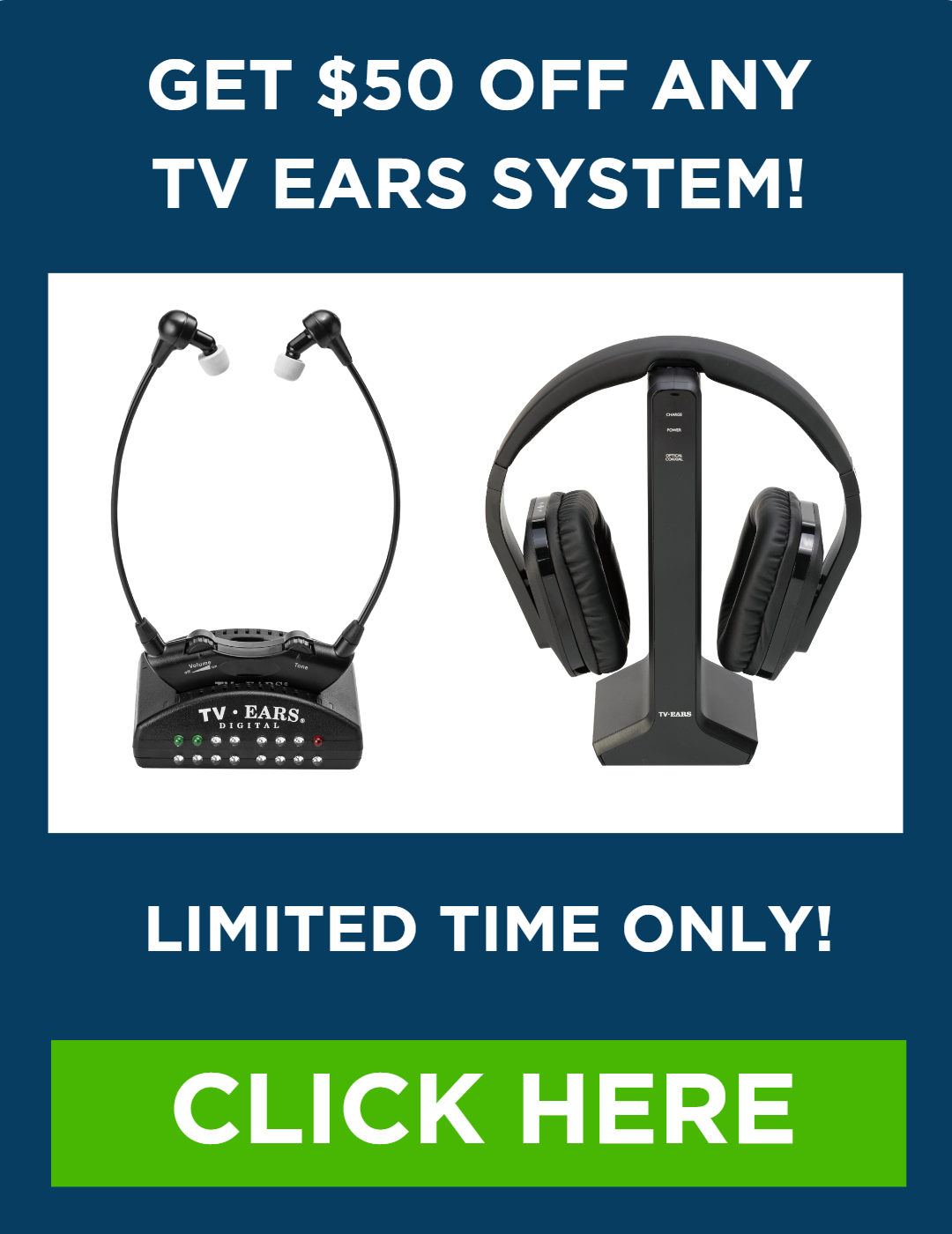
The TV Ears Digital System is purpose-built for one thing: making TV dialogue crystal clear for people with hearing loss. Unlike general-purpose headphones that simply make everything louder, TV Ears uses patented Voice Clarifying Circuitry that isolates and enhances human speech frequencies while dampening background noise. The result is that dialogue “jumps out” of the soundtrack, making even whispers, accents, and mumbled lines easy to understand.
At just 2 ounces, the under-chin headset is remarkably lightweight. It rests gently below your jaw rather than clamping over your ears, which means no pressure, no overheating, and no interference with glasses or hearing aids. The naturally angled ear tips direct sound straight into the ear canal for maximum clarity.
Setup is genuinely simple: connect the transmitter to your TV’s audio output (digital optical, RCA, or 3.5mm), place the headset on the charging cradle, and you’re ready to go. No Bluetooth pairing, no apps, no menus. The digital infrared connection delivers zero-delay audio, so lips and sound stay perfectly synchronized.
As a classified Assistive Listening Device, TV Ears can deliver up to 120 dB of voice-clarifying audio, which is significantly more powerful than standard consumer headphones. This makes it effective even for people with more significant hearing loss. Doctor and audiologist recommended, TV Ears has been the most trusted brand in TV listening for over 25 years.
Pros:
- Patented Voice Clarifying Circuitry specifically enhances dialogue
- Ultra-lightweight 2 oz under-chin design, comfortable for hours
- Works with or without hearing aids
- 120 dB assistive-grade volume capability
- True plug-and-play setup, no tech skills needed
- Doctor and audiologist recommended
Cons:
- 4-hour battery life is shorter than some competitors
- Infrared requires line-of-sight to the transmitter
Best for: Seniors with mild to severe hearing loss who prioritize dialogue clarity above all else. If understanding every word is your goal, this is the headset to buy.
2. TV Ears Long Range Headphones — Best for Large Homes
Price: $199.95 | Wireless: 5.8 GHz | Weight: Over-ear | Battery: Rechargeable
For seniors who want an over-ear headphone experience with TV Ears’ Voice Clarifying Audio technology, the TV Ears Long Range Headphones deliver. These use 5.8 GHz wireless technology with a 100-foot range, meaning the signal passes through walls. You can walk to the kitchen for a snack and never miss a line of dialogue.
The headphones offer two audio profiles: one for Voice Clarifying Audio (optimized for dialogue) and one for Theater Sound (richer, more immersive audio for movies). With 120 dB of assistive-grade power, they provide the same medical-grade clarity as the Digital System in a traditional over-ear form factor.
Pros:
- 100-foot range passes through walls
- Two audio modes (Voice Clarity and Theater Sound)
- 120 dB assistive-grade volume
- Works with all TVs
Cons:
- Heavier than the under-chin headset design
- Higher price point at $199.95
Best for: Seniors who prefer traditional over-ear headphones and need room-to-room range.
3. Sennheiser RS 175 — Best Premium Sound Quality
Price: ~$279.99 | Wireless: RF | Weight: ~10 oz | Battery: Up to 18 hours
Sennheiser is a legendary name in audio, and the RS 175 delivers exceptional overall sound quality. These RF wireless headphones offer bass boost and virtual surround sound modes, an impressive 18-hour battery life, and a range of up to 100 meters.
Where the RS 175 excels is pure audio fidelity. Music, movies, and sports sound rich and immersive. The closed-back, around-ear design provides good noise isolation, and the ergonomic fit is comfortable for extended sessions.
However, the RS 175 is designed as a general-purpose wireless headphone system, not specifically as an assistive listening device. It lacks dedicated voice-clarifying technology, which means seniors with hearing loss may find dialogue less distinct compared to purpose-built systems like TV Ears. At nearly $280, it is also the most expensive option on this list.
Pros:
- Excellent overall audio quality with bass boost and surround modes
- 18-hour battery life, best in class
- 100-meter RF range
- Trusted Sennheiser brand
Cons:
- No dedicated voice-clarifying technology for hearing loss
- Heavier at ~10 oz, may cause discomfort during long sessions
- Premium price at ~$280
- Not classified as an assistive listening device
Best for: Audiophiles who want premium sound quality and have mild hearing difficulties. Less ideal for moderate to severe hearing loss.
4. Avantree HT5009 Plus — Best Bluetooth Option
Price: ~$89-$110 | Wireless: Bluetooth 5.0 (aptX Low Latency) | Weight: ~8 oz | Battery: Up to 60 hours
If you specifically want Bluetooth connectivity, the Avantree HT5009 Plus is the strongest option for TV use. It uses Qualcomm aptX Low Latency chipsets to minimize audio delay, and its Clear Voice mode helps sharpen dialogue. The 60-hour battery life is outstanding, and the lightweight build keeps them comfortable.
The HT5009 Plus comes with its own Bluetooth transmitter, so it works with TVs that do not have built-in Bluetooth. Setup involves plugging in the transmitter and pairing the headphones, which takes a few extra steps compared to simpler RF systems.
Pros:
- 60-hour battery life is exceptional
- Clear Voice mode enhances dialogue
- Low-latency Bluetooth minimizes lip-sync issues
- Affordable price point
- 100-foot wireless range
Cons:
- Bluetooth pairing may intimidate less tech-savvy users
- Low-latency Bluetooth still not as delay-free as RF or infrared
- Not an assistive listening device; limited max volume
Best for: Tech-comfortable seniors who want Bluetooth versatility and outstanding battery life. Not the best choice for significant hearing loss.
5. SIMOLIO SM-829D1 — Best Budget Option
Price: $99 | Wireless: 2.4 GHz RF | Weight: Over-ear | Battery: ~10 hours
The SIMOLIO SM-829D1 offers solid value at $99. It uses 2.4 GHz RF wireless technology for lag-free audio and includes a two-level clear dialog mode that boosts treble frequencies to help with speech clarity. The transmitter doubles as a charging dock, and the 100-foot range gives you freedom to move around.
A unique feature is the bypass capability, which lets the TV speakers or a soundbar play audio simultaneously with the headphones. This means one person can use the headphones at their preferred volume while others listen through the TV speakers normally, a practical solution for mixed-hearing households.
Pros:
- Affordable at $99
- Lag-free 2.4 GHz RF connection
- Bypass feature for simultaneous TV speaker and headphone audio
- Two-level dialog enhancement mode
- 10-hour battery with spare battery included
Cons:
- Dialog enhancement is basic compared to TV Ears’ Voice Clarifying Circuitry
- Build quality is adequate but not premium
- Over-ear design may feel warm during long sessions
Best for: Budget-conscious buyers who want a solid wireless TV headphone with basic dialog enhancement.
Quick Comparison: Best Wireless TV Headphones for Seniors
| Model | Price | Wireless Type | Voice Clarity | Battery | Best For |
|---|---|---|---|---|---|
| TV Ears Digital System | $179.95 | Digital IR | ★★★★★ | ~4 hrs | Dialogue clarity |
| TV Ears Long Range | $199.95 | 5.8 GHz | ★★★★★ | Rechargeable | Large homes |
| Sennheiser RS 175 | ~$279.99 | RF | ★★★☆☆ | 18 hrs | Audiophiles |
| Avantree HT5009 Plus | ~$89-$110 | BT 5.0 (aptX LL) | ★★★★☆ | 60 hrs | Bluetooth users |
| SIMOLIO SM-829D1 | $99 | 2.4 GHz RF | ★★★☆☆ | 10 hrs | Budget buyers |
Why We Recommend TV Ears as Our Top Pick
After evaluating dozens of wireless TV headphones, TV Ears consistently stands out for one critical reason: it is the only system on this list specifically engineered as an assistive listening device for TV dialogue.
Most wireless headphones, even good ones like the Sennheiser RS 175 or Avantree HT5009 Plus, are designed primarily for general audio enjoyment. They can make sounds louder, but they do not fundamentally change how speech is processed. TV Ears’ patented Voice Clarifying Circuitry works differently. It actively isolates speech frequencies and reduces competing background audio, which is why users consistently report that “words seem to jump out” of the soundtrack.
This distinction matters enormously for seniors with hearing loss. The challenge is not just volume; it is clarity. TV Ears solves the right problem.
Additionally, the under-chin headset design is uniquely thoughtful for the senior demographic. It weighs only 2 ounces, does not interfere with hearing aids, and avoids the heat and pressure of traditional over-ear headphones. The plug-and-play setup requires zero technical skill, and the snap-fit charging cradle makes daily use effortless.
TV Ears works with or without hearing aids, which means it serves as a supplemental device that enhances your TV experience regardless of whether you already use hearing assistance. This versatility makes it the most practical choice for the widest range of seniors.
Frequently Asked Questions
Can I use wireless TV headphones with my hearing aids?
Yes. Under-chin style headsets like TV Ears are specifically designed to work alongside hearing aids without interference. Over-ear headphones may work with some hearing aids but can cause feedback or discomfort. If you wear hearing aids, an under-chin or earbud-style design is your safest bet.
What is the difference between RF and Bluetooth for TV headphones?
RF (Radio Frequency) transmits audio with virtually zero delay, keeping sound perfectly synchronized with the picture on screen. Standard Bluetooth introduces a delay of 100-300 milliseconds, which creates a noticeable lip-sync problem. Low-latency Bluetooth (aptX LL) reduces this gap but may still not be as seamless as RF. For TV watching specifically, RF is the more reliable choice.
Will wireless TV headphones let others still hear the TV?
Most wireless TV headphone systems do not mute the TV speakers. You can typically set the TV to a low or moderate volume for others in the room while the headphone user listens at their own preferred level. Some models, like the SIMOLIO SM-829D1, include a dedicated bypass feature that makes this especially seamless.
How difficult are wireless TV headphones to set up?
The simplest systems, like TV Ears, use a plug-and-play design: connect the transmitter to your TV with one cable, set the headset on the charging cradle, and it works automatically. No pairing, no apps, no configuration. Bluetooth-based systems require a one-time pairing step, which takes a few extra minutes.
Are wireless TV headphones safe for people with hearing loss?
Wireless TV headphones are generally safe and can actually be beneficial. By delivering clearer audio directly to the listener, they reduce the need for dangerously high TV volume levels that affect everyone in the room. Assistive listening devices like TV Ears are doctor-recommended for this purpose. However, as with any audio device, it is important not to listen at excessively high volumes for extended periods.
Final Thoughts
The right pair of wireless TV headphones can genuinely transform the television experience for seniors with hearing loss, and for everyone else in the household. No more volume wars, no more missed dialogue, no more frustration.
For most seniors, the TV Ears Digital System is the clear winner. Its Voice Clarifying Circuitry, featherlight design, and dead-simple setup make it the most effective and easiest-to-use option available. If you need extended range throughout your home, step up to the TV Ears Long Range Headphones or the 5.8 Digital System for wall-penetrating coverage.
Whatever you choose, the important thing is to stop struggling and start enjoying TV again. Clear dialogue is not a luxury; it is a quality-of-life essential.